

Key takeaways
- Countertop (3-5 tray, new): $3,000 - $8,000 AUD (2026) - 10-20 kg per cycle; cafes, small bakeries, gelato, dessert bars
- Reach-in (5-15 tray, new): $8,000 - $25,000 AUD - 20-80 kg per cycle; restaurants, hotels, pubs, aged care
- Roll-in (20-40+ tray, new): $25,000 - $72,000+ AUD - 80-300+ kg per cycle; catering, central kitchens, food manufacturing
- #1 sizing mistake: buying to average batch size rather than peak batch size - an undersized unit forces multiple cycles, doubling cooling time and defeating the purpose
- Annual running costs: countertop $400-$1,000 / reach-in $800-$2,500 / roll-in $1,500-$3,500
- Footprint: countertop sits on bench; reach-in is 0.8 x 0.8 m floor; roll-in is 1.0 x 1.2 m+ floor
- Power: countertop and reach-in run on 240V single phase; most roll-in units need 415V three phase
Introduction
Blast chillers come in three sizes, and the one you choose determines your batch capacity, floor space requirement, power supply needs and price bracket for the next 10-15 years. The most common purchasing mistake in Australia is undersizing: buying a unit that handles the average batch but not the peak batch. An undersized blast chiller forces multiple cooling cycles, doubles the time food spends waiting to be chilled, and negates most of the HACCP and food waste benefits the machine was bought to deliver.
This guide compares the cost, capacity and fit of all three configurations so you can match the right size to your kitchen on the first purchase. Get quotes for blast chillers to compare and buy from verified Australian suppliers once you have confirmed which configuration fits. For a full price breakdown including payback modelling, see our HospitalityHub blast chiller price guide.
Kitchens where getting the size right matters most:
- Restaurants and hotels choosing between reach-in and roll-in based on service volume
- Bakeries and patisseries deciding whether countertop or reach-in fits their production cycle
- Catering companies needing roll-in capacity but questioning whether the cost is justified
- Aged care kitchens sizing for regulatory compliance across multi-day batch cooking
- Any kitchen replacing a blast chiller that turned out to be too small for peak production
Match configuration to your peak batch size
Before comparing models, calculate your peak batch volume. This is the largest single batch of hot food you need to chill at one time, not your average batch. Your peak sets the minimum machine size.
Configuration | Peak Batch Size | Best For |
|---|---|---|
Countertop (3-5 tray) |
Up to 20 kg |
Cafes doing daily dessert or pastry batches; gelato production; small bakeries |
Reach-in (5-15 tray) |
20 - 80 kg |
Restaurant dinner prep; hotel banquet pre-production; pub and bistro batch cooking |
Roll-in (20-40+ tray) |
80 - 300+ kg |
Multi-site catering; central production kitchens; aged care group kitchens; food manufacturing |
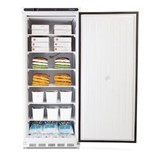
Choose reach-in if your peak batch is 20-80 kg. A 10-tray GN 1/1 reach-in is the workhorse of Australian commercial kitchens. It handles a full dinner prep batch for a 100-150 cover restaurant in a single 90-minute cycle.
Choose countertop only if your peak batch genuinely stays under 20 kg. A countertop unit on a cafe bench handles daily pastry, dessert or gelato production efficiently. But if your production ever exceeds 20 kg in a single batch, you need reach-in, or you will run double cycles that push food back into the danger zone while it waits.
Choose roll-in if your peak batch exceeds 80 kg or you load from a mobile trolley. Roll-in units accept pre-loaded racking wheeled directly from the cooking line, eliminating manual tray loading. QLD and VIC aged care operators running 3-5 day cook-chill cycles typically need 150-300 kg capacity per batch.
Evaluate the key specifications across sizes
With your configuration confirmed, these are the specs that differ most between the three sizes and affect your purchasing decision.
Specification | Countertop | Reach-In | Roll-In |
|---|---|---|---|
Tray capacity |
3-5 GN 1/1 |
5-15 GN 1/1 |
20-40+ GN 1/1 |
Footprint |
Benchtop (0.5 x 0.6 m) |
0.8 x 0.8 m floor |
1.0 x 1.2 m+ floor |
Power |
240V / 10A |
240V / 15A |
415V / 32A (three phase) |
Chill modes |
Soft + hard chill |
Soft + hard + shock freeze |
Full range + programmable cycles |
HACCP logging |
Basic (USB only on some) |
Standard (USB / WiFi) |
Advanced (WiFi + remote monitoring) |
Mobile racking |
No |
No |
Yes - wheeled trolley loads directly |
Understand the full cost breakdown (2026 prices)
Purchase price is only part of the picture. Running costs, maintenance and the savings each size generates must all factor into the decision.
Cost Category | Countertop | Reach-In | Roll-In |
|---|---|---|---|
Purchase price (new) |
$3,000 - $8,000 |
$8,000 - $25,000 |
$25,000 - $72,000+ |
Annual energy |
$200 - $500 |
$400 - $1,200 |
$800 - $2,000 |
Annual maintenance |
$200 - $500 |
$400 - $1,300 |
$700 - $1,500 |
5-year TCO |
$5,000 - $13,000 |
$12,000 - $37,500 |
$32,500 - $89,500 |
Used / refurbished |
$1,500 - $4,000 |
$4,000 - $12,000 |
$10,000 - $30,000 |
A mid-range 10-tray reach-in at $15,000 with $1,500/year running costs totals $22,500 over five years. Against $25,000+/year in food waste and labour savings for a 100-cover restaurant, the unit is cash-flow positive from month 8. A $40,000 roll-in for a catering company doing 200+ kg batches saves $50,000-$80,000/year in food cost and prep labour. The larger machine pays back faster in absolute terms because the savings scale with batch volume. Get quotes for blast chillers to compare and buy from verified Australian suppliers to see current pricing across all three configurations.
Decision framework - countertop vs reach-in vs roll-in
Decision Factor | Countertop | Reach-In | Roll-In |
|---|---|---|---|
Peak batch under 20 kg |
Best fit |
Oversized |
Oversized |
Peak batch 20-80 kg |
Too small (multiple cycles) |
Best fit |
Oversized |
Peak batch 80+ kg |
Not suitable |
Undersized (multiple cycles) |
Best fit |
No floor space available |
Sits on bench |
Requires floor space |
Requires floor space |
Single-phase power only |
240V / 10A |
240V / 15A |
Requires 3-phase |
Mobile racking workflow |
Not compatible |
Not compatible |
Designed for trolley loading |
Budget under $10,000 |
Most models |
Entry models only |
Not available |
Evaluate suppliers
You are ready to go to market. Use this checklist to assess each supplier against the same criteria.
Factor | What to Ask |
|---|---|
All sizes available |
Does the supplier offer countertop, reach-in and roll-in so you can compare on the same brand? |
Capacity rating |
What is the tested chill capacity (kg) from 70C to 3C in 90 minutes at full load? |
GN compatibility |
Does the unit accept standard GN 1/1 trays, and what is the maximum tray count? |
Power requirements |
What power supply does each size need, and does your kitchen have three-phase if roll-in is specified? |
HACCP logging |
Does the unit include automatic temperature logging for audit compliance? |
Racking compatibility (roll-in) |
Is the roll-in compatible with your existing mobile racking or does it require proprietary trolleys? |
Warranty |
What is the warranty on compressor, cabinet and electronics for each size? |
Service in your state |
Is there a local service agent in NSW, VIC, QLD, WA or SA? |
Spare parts |
Are gaskets, probes and controls stocked in Australia? |
Finance / rental |
Does the supplier offer equipment finance, rental or lease-to-own options? |
Frequently asked questions
What happens if i buy a blast chiller that is too small?
You run multiple cycles per batch, which doubles cooling time and defeats the food safety and efficiency purpose. Food waiting for the second cycle sits in the danger zone while the first batch chills. Size to your peak batch, not your average.
Can a reach-in blast chiller handle the volume of a small catering operation?
If your peak batch stays under 80 kg, a 15-tray reach-in handles most small catering prep. Above 80 kg per batch, or if you load from a mobile trolley, roll-in is the better fit.
Does a countertop blast chiller need special power?
No. Countertop models run on standard 240V/10A single-phase power. They plug into a standard kitchen outlet, making them the simplest to install.
How much floor space does a reach-in blast chiller need?
A typical 10-tray reach-in occupies approximately 0.8 x 0.8 m of floor space plus 100-150 mm rear clearance for ventilation. Confirm your available space before purchase, including door-swing clearance.
Is a roll-in blast chiller worth 3-4 times the price of a reach-in?
For kitchens doing 80+ kg batches, yes. The roll-in eliminates manual tray loading (saving 15-30 minutes per batch in labour), handles 3-5 times the volume per cycle, and the food waste savings scale proportionally with batch size.
Summary
- Countertop ($3,000-$8,000) suits peak batches under 20 kg and kitchens with no floor space to spare
- Reach-in ($8,000-$25,000) is the standard for 20-80 kg batches in restaurants, hotels and aged care
- Roll-in ($25,000-$72,000+) handles 80-300+ kg with mobile racking for high-volume and central kitchen operations
- Size to your peak batch, not your average, to avoid running multiple cycles that defeat the purpose
- Roll-in units need three-phase power; confirm your kitchen's electrical capacity before purchase
- Running costs range from $400/year (countertop) to $3,500/year (roll-in) for energy and maintenance
Ready to source your blast chiller?
Don't waste time contacting suppliers individually. HospitalityHub gives you direct access to verified Australian blast chiller suppliers - compare models, specs and pricing in one place, then request quotes from suppliers best matched to your kitchen.
- Compare models - filter by capacity, configuration and region
- Request quotes - contact multiple verified suppliers with a single enquiry
- Contact suppliers directly - speak to specialists who service your state
→ Get and compare blast chiller quotes now →
-160x160-state_article-rel-cat.png)