

Key takeaways
- Blast chiller cooling time (70C to 3C): under 90 minutes - meets HACCP 2-hour cooling target with margin
- Standard fridge cooling time (70C to 3C): 4 - 8+ hours - food sits in the danger zone (60C-5C) long enough for bacterial growth
- Blast chiller price range (new, AUD 2026): $3,000 - $72,000+ - countertop to roll-in; reach-in at $8,000-$25,000 is the most common
- Cost of fridge-cooling failures: $5,000 - $50,000+ per incident - food safety non-compliance, product disposal, potential closure and fines
- Food waste difference: blast-chilled food lasts 3-5 days vs 24 hours for fridge-cooled equivalents
- HACCP audit risk: cooling time non-compliance is the #1 critical control point failure across Australian commercial kitchens
- Fridge temperature impact: placing hot food in a standard fridge raises internal temp by 5-10C, risking all stored food
Introduction
Putting hot food into a standard commercial fridge is the most common cooling method in Australian kitchens and the most expensive one once the hidden costs are counted. A fridge takes 4-8 hours to bring 70C food to 3C. During that time the food passes through the bacterial danger zone, the fridge's internal temperature rises (putting everything else stored inside at risk), and the compressor runs overtime trying to recover. A blast chiller does the same job in under 90 minutes, protects the rest of the cold chain, and extends the usable life of the food from 24 hours to 3-5 days.
This comparison guide puts specific cost numbers on both approaches so you can see exactly where the money goes. Get quotes for blast chillers to compare and buy from verified Australian suppliers once you have run the numbers for your kitchen.
Kitchens where this cost comparison matters most:
- Any kitchen currently cooling hot food in a standard fridge and experiencing HACCP cooling time failures
- Restaurants and hotels throwing away prep that has exceeded its 24-hour fridge hold time
- Aged care and hospital kitchens under strict food safety audit regimes
- Operations experiencing premature fridge compressor wear from regular hot-food loading
Understand the two cooling methods
The first step is understanding what actually happens when you cool hot food in a fridge versus a blast chiller. The difference is not just speed - it affects food safety, food quality and the fridge itself.
Factor | Standard Fridge Cooling | Blast Chiller |
|---|---|---|
Cooling time (70C to 3C) |
4 - 8+ hours |
Under 90 minutes |
Time in danger zone (60C-5C) |
3 - 6 hours |
Under 60 minutes |
Impact on other stored food |
Raises fridge temp by 5-10C, risking all contents |
None - dedicated unit, isolated from storage |
Shelf life of cooled food |
24 hours (HACCP standard) |
3 - 5 days (blast chilled) / weeks (shock frozen) |
HACCP compliance |
Frequently fails 2-hour cooling CCP |
Consistently meets or beats the target |
Fridge cooling fails the HACCP 2-hour cooling target on most dense food items. A 5 kg pot of soup placed in a commercial fridge takes 5-7 hours to reach 3C core temperature. During that time it passes through the danger zone where bacteria double every 20 minutes. The food either gets served with elevated risk or gets thrown away at the next temperature check.
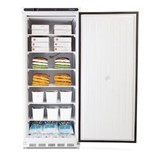
Hot food in a fridge also damages everything else inside. Loading 10-20 kg of hot food into a fridge raises the internal temperature by 5-10C. Dairy, raw proteins and prepped salads already stored inside are pushed above 5C for hours, creating a secondary food safety risk and potential product loss.
Compare the real costs
With the method difference understood, these are the specific costs on each side of the comparison.
Cost Category | Fridge Cooling (Annual) | Blast Chiller (Annual) |
|---|---|---|
Food waste from cooling failures |
$8,000 - $25,000 |
$1,000 - $4,000 |
Extra fridge compressor wear |
$500 - $2,000 in premature repair/replacement |
$0 - fridge runs at normal load |
HACCP non-compliance risk |
$5,000 - $50,000+ per incident (corrective action, disposal, potential closure) |
Near zero - documented compliance |
Labour (re-cooking disposed food) |
$3,000 - $10,000 |
$0 - batch prep lasts 3-5 days |
Blast chiller running cost |
$0 |
$800 - $3,500 (energy + maintenance) |
A mid-size restaurant spending $12,000/week on food with 5% waste from cooling failures and short shelf life loses approximately $31,000/year in avoidable food cost. A $15,000 reach-in blast chiller with $2,000/year running costs pays for itself in under 6 months and saves $25,000+ annually from year two onward. The HACCP compliance benefit is harder to quantify but a single food safety incident involving corrective action, product disposal and potential temporary closure can cost $10,000-$50,000+. Get quotes for blast chillers to compare and buy from verified Australian suppliers to build the cost comparison for your specific operation.
Understand the blast chiller investment (2026 prices)
Purchase price is only part of the picture. Here is the full cost of adding a blast chiller to your kitchen.
Category | Price Range (AUD) | Notes |
|---|---|---|
Countertop (3-5 tray) |
$3,000 - $8,000 |
Fits on existing bench; 240V single phase; 10-20 kg per cycle |
Reach-in (5-15 tray) |
$8,000 - $25,000 |
Most common for restaurants and hotels; 20-80 kg per cycle |
Roll-in (20-40+ tray) |
$25,000 - $72,000+ |
Central kitchens and high-volume catering; 80-300+ kg per cycle |
Used / refurbished |
$1,500 - $30,000 |
Check compressor, gaskets, probes and refrigerant type before purchase |
Annual running costs |
$800 - $3,500 |
Energy + maintenance; lower than the annual food waste it prevents |
Decision framework - blast chiller vs fridge cooling
Decision Factor | Fridge Cooling Acceptable | Blast Chiller Justified |
|---|---|---|
Volume of hot food cooled daily |
Under 5 kg, already portioned thin |
5+ kg of dense food (soups, sauces, proteins) |
HACCP audit regime |
Informal or infrequent |
Formal HACCP plan with cooling CCP monitoring |
Food waste rate |
Under 3% of food cost |
Above 5% with prep spoilage as a contributor |
Prep model |
Cook-to-order only, no batch prep |
Batch-cook-and-chill for multi-day service |
Kitchen type |
Small cafe, low complexity menu |
Restaurant, hotel, aged care, catering, central kitchen |
Fridge compressor issues |
No hot-food loading |
Regular hot-food loading causing compressor stress |
Evaluate suppliers
You are ready to go to market. Use this checklist to assess each supplier against the same criteria.
Factor | What to Ask |
|---|---|
Chill performance |
What is the rated chill time from 70C to 3C at full load capacity? |
HACCP logging |
Does the unit include automatic temperature logging for HACCP documentation? |
Core probe |
How many probes are included and what does a replacement cost? |
GN compatibility |
Does the unit accept standard GN 1/1 trays? |
Chill modes |
Does the unit offer soft chill, hard chill and shock freeze modes? |
Power requirements |
What is the power supply requirement, and will it work with your existing kitchen electrical? |
Warranty |
What is the warranty on compressor, cabinet and electronics? |
Service in your state |
Is there a local service agent in NSW, VIC, QLD, WA or SA? |
Spare parts |
Are gaskets, probes and control boards stocked locally in Australia? |
Finance / rental |
Does the supplier offer equipment finance, rental or lease-to-own? |
Frequently asked questions
How much more does a blast chiller cost to run compared to using the fridge i already have?
A blast chiller adds $800-$3,500/year in energy and maintenance. But the food waste, compressor wear and compliance risk of fridge-cooling costs most kitchens $15,000-$40,000/year. The blast chiller costs less to run than the problems it eliminates.
Is fridge cooling ever acceptable under HACCP?
Only for very small volumes of thin, portioned food that can reach 5C within 2 hours. Dense items like soups, sauces and whole proteins cannot meet the cooling time target in a standard fridge, making blast chilling the only reliable compliance method.
Does putting hot food in a fridge damage the fridge?
Yes. Loading 10-20 kg of hot food raises internal temperature by 5-10C, forcing the compressor to run overtime. Repeated hot-loading accelerates compressor wear and can shorten fridge life by 2-4 years, adding $1,000-$3,000 in premature replacement cost.
What is the payback period for switching from fridge cooling to a blast chiller?
A $15,000 reach-in blast chiller typically pays back in 6-10 months through reduced food waste, eliminated re-cooking labour and lower fridge maintenance costs. Kitchens with formal HACCP regimes also avoid the cost of cooling non-compliance incidents.
Can i use a blast chiller AS a fridge for storage?
Some models include a basic holding mode for short-term storage after the chill cycle, but blast chillers are not designed to replace a commercial fridge. The standard workflow is blast-chill then transfer to fridge or freezer for holding.
Summary
- Fridge cooling takes 4-8 hours and fails HACCP targets on dense food; blast chilling takes under 90 minutes
- The hidden cost of fridge-cooling (waste, re-cooking, compressor wear, compliance risk) typically exceeds $15,000-$40,000/year
- Blast-chilled food lasts 3-5 days vs 24 hours, reducing waste and enabling batch-cook workflows
- Reach-in blast chillers ($8,000-$25,000) pay back in 6-10 months for most mid-size kitchens
- Hot food in a fridge damages the compressor and risks all other stored food
- HACCP cooling non-compliance is the most common critical control point failure in Australian commercial kitchens
Ready to source your blast chiller?
Don't waste time contacting suppliers individually. HospitalityHub gives you direct access to verified Australian blast chiller suppliers - compare models, specs and pricing in one place, then request quotes from suppliers best matched to your kitchen.
- Compare models - filter by capacity, configuration and region
- Request quotes - contact multiple verified suppliers with a single enquiry
- Contact suppliers directly - speak to specialists who service your state
→ Get and compare blast chiller quotes now →
-160x160-state_article-rel-cat.png)