
Key takeaways
Factor | Typical Range / Value | Buyer Implication |
|---|---|---|
Glass door vs solid door — energy |
Glass doors use 15–30% more energy |
Glass doors trade energy efficiency for product visibility and customer self-service |
Temperature recovery |
Glass door units recover 2–5 minutes slower after opening |
In high-traffic retail, heated glass and fan-forced systems minimise recovery time |
Display benefit |
20–40% higher impulse purchase rate |
Glass door units drive sales in customer-facing environments — the energy premium pays for itself in revenue |
Price range (AUD, 2026) |
$1,200–$12,000+ |
Single-door units from $1,200; multi-door display cabinets from $4,000 |
Storage capacity |
200–1,500+ litres |
Glass door units offer 10–15% less usable volume than equivalent solid-door models due to door frame depth |
Best application — glass door |
Retail, hospitality, front-of-house |
Any location where customers or staff need to see contents without opening the door |
Introduction
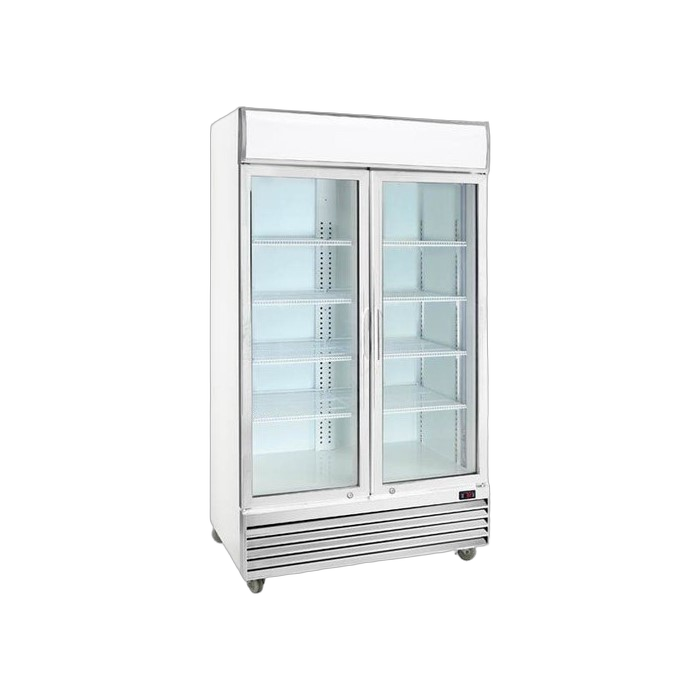
Glass door commercial fridges and freezers are the default choice for any business where product visibility drives sales or reduces door-open time. In 2026, Australian hospitality, retail and food service operations are increasingly choosing glass door units over solid-door alternatives — not just for customer-facing displays, but for back-of-house efficiency, where staff can identify stock without opening the door and breaking the cold chain. The trade-off is energy consumption: glass doors let more heat in, which means higher running costs.
This comparison guide breaks down when a glass door unit is the right choice, when solid door is better, and how to assess the financial trade-off between display benefit and energy cost. Compare commercial glass door fridges and freezers from verified Australian suppliers on HospitalityHub once you have confirmed which configuration suits your operation.
Operations where this decision matters most:
- Convenience stores, bottle shops and supermarkets using glass door merchandising
- Cafes, restaurants and bars displaying beverages, desserts or grab-and-go items
- Commercial kitchens where staff need rapid visual stock identification
- Bakeries and patisseries displaying chilled products to customers
- Florists, pharmacies and any retail operation with temperature-controlled display needs
Determine whether your application is display or storage
Before comparing models, confirm whether the unit’s primary function is display (customer or staff visibility) or storage (capacity and temperature stability). This sets the specification priority.
Application | Primary Need | Recommended Door Type |
|---|---|---|
Customer-facing retail display |
Visibility, impulse purchase, brand presentation |
Glass door — the display benefit directly increases sales revenue |
Hospitality bar or cafe front |
Quick product identification, speed of service |
Glass door — staff and customers can see stock levels and locate items faster |
Back-of-house kitchen storage |
Temperature stability, capacity, energy cost |
Solid door preferred — unless stock identification speed is a priority in fast-paced kitchens |
Frozen storage (long-term) |
Temperature stability, energy cost, bulk capacity |
Solid door strongly preferred — glass door freezers lose more energy through the glass panel |
Choose glass door when the unit is in a customer-facing or high-traffic staff area. The sales uplift from product visibility in retail (20–40% higher impulse purchase rates) and the time saving from visual stock checks in kitchens both generate measurable returns that typically exceed the energy cost premium.
Choose solid door when temperature stability and running cost are the priorities. Back-of-house walk-in storage, frozen inventory holding and any application where the door opens fewer than 20 times per day will see a direct benefit from solid-door insulation. The 15–30% energy saving compounds over a 10-year asset life.
Evaluate the key specifications
With your application confirmed, these are the specs that determine whether a given glass door unit fits your space, stock volume and energy budget.
Specification | Typical Range | Buyer Consideration |
|---|---|---|
Capacity |
200–1,500+ litres |
Glass door units offer 10–15% less usable volume than same-footprint solid-door models |
Temperature range |
Fridge: 0–8°C / Freezer: –18 to –22°C |
Confirm the unit holds target temp with doors opening at your expected frequency |
Glass type |
Double-glazed, heated, low-E coated |
Heated glass prevents condensation in humid environments (QLD, NT) — adds 5–10% to purchase cost |
Energy rating |
GEMS registered, 2–5 star |
Higher star ratings reduce running cost by $150–$400/year — worth modelling over a 10-year life |
Refrigerant |
R290 (hydrocarbon) or R404A |
R290 is the Australian market standard for new units — lower GWP and more energy efficient |
Shelving |
3–6 adjustable shelves |
Adjustable shelving maximises display flexibility — confirm shelf weight rating for your heaviest stock |
Understand the full cost breakdown (2026 prices)
Purchase price is only part of the picture — energy cost over a 10-year life often exceeds the purchase price of a commercial fridge or freezer. Here is the full breakdown.
Category | Price Range (AUD) | Typical Configuration |
|---|---|---|
Single glass door fridge |
$1,200–$3,500 |
200–400 L, upright, retail or cafe front-of-house |
Double glass door fridge |
$2,500–$6,000 |
600–1,000 L, upright, bar or retail |
Multi-door display cabinet |
$4,000–$12,000+ |
1,000–1,500+ L, 3–4 doors, supermarket or large retail |
Glass door freezer |
$2,000–$8,000 |
200–800 L, heated glass standard to prevent condensation |
Used / refurbished |
$500–$4,000 |
Check compressor hours, door seal condition and refrigerant type (R404A phase-down applies) |
Annual energy cost |
$400–$1,800 |
Glass door units run 15–30% higher than solid door equivalents — heated glass adds another 5–10% |
Annual maintenance |
$200–$800 |
Condenser cleaning, door seal replacement, thermostat calibration |
Over 10 years, a $3,000 double-door glass fridge running at $900/year in energy costs a total of $12,000 — the energy bill is 3× the purchase price. Investing $500–$1,000 more upfront for a higher-rated unit saves $150–$400/year, which pays back in 2–3 years and saves $1,500–$4,000 over the asset life. In QLD and northern NSW, heated glass is not optional — condensation on non-heated glass doors obscures display and drips onto stock. Request quotes for glass door fridges and freezers on HospitalityHub to compare energy ratings and pricing side by side.
Decision framework — glass door vs solid door
Decision Factor | Glass Door | Solid Door |
|---|---|---|
Product visibility |
????? |
? |
Energy efficiency |
??? |
????? |
Temperature stability |
??? |
????? |
Usable storage volume |
??? |
???? |
Sales impact (retail) |
????? |
? |
Purchase cost |
10–20% higher |
Lower |
Annual energy cost |
15–30% higher |
Lower |
Condensation risk |
Requires heated glass in humid climates |
Not applicable |
Evaluate suppliers
You are ready to go to market. Use this checklist to assess each supplier against the same criteria.
Factor | What to Ask |
|---|---|
Energy rating |
What is the GEMS energy rating and annual kWh consumption at stated conditions? |
Glass specification |
Is the glass double-glazed, heated, and low-E coated? What is the condensation performance? |
Temperature recovery |
How quickly does the unit recover to set temperature after door opening under peak load? |
Refrigerant type |
Is the unit running R290 or R404A? R290 is the preferred standard for new units in Australia. |
Shelving configuration |
Are shelves adjustable, and what is the weight rating per shelf? |
Warranty |
What is the warranty on the compressor, cabinet and glass door assembly? |
Delivery and installation |
Is delivery and positioning included, and is there a surcharge for regional or interstate delivery? |
Service network |
Is there a local service agent in your state (NSW, VIC, QLD, WA, SA)? |
Spare parts |
Are door seals, shelves, and compressor components stocked in Australia? |
Food safety compliance |
Does the unit comply with AS 1731 and relevant state food safety temperature requirements? |
Frequently asked questions
How much more does a glass door fridge cost to run than a solid door?
Glass door units typically consume 15–30% more energy than equivalent solid-door models, adding $150–$500 per year to energy costs depending on size and door-open frequency. Heated glass adds another 5–10% on top.
Do glass door fridges hold temperature AS well AS solid door units?
Glass doors have lower insulation values than solid panels, so temperature recovery after door opening is 2–5 minutes slower. Fan-forced units with heated double-glazed glass minimise this gap in high-traffic environments.
When does the display benefit of glass doors justify the energy premium?
In any customer-facing retail or hospitality environment, the sales uplift from product visibility typically exceeds the energy cost premium within the first month. Back-of-house applications with low foot traffic rarely justify glass doors.
Do i need heated glass in queensland or northern NSW?
In high-humidity environments, non-heated glass doors fog with condensation, obscuring product visibility and dripping onto stock. Heated glass is effectively mandatory in tropical and subtropical climates across QLD, NT and northern NSW.
What refrigerant should i specify for a new glass door unit in 2026?
R290 (propane) is the Australian market standard for new commercial refrigeration. It has a GWP of 3 compared to 3,922 for R404A, is more energy efficient, and aligns with the Australian Government’s HFC phase-down schedule under the Ozone Protection and Synthetic Greenhouse Gas Management Act.
Summary
- Glass door units are the right choice when product visibility drives sales or reduces door-open time for staff
- Solid door units are better for back-of-house storage where temperature stability and energy cost matter most
- Glass door units cost 10–20% more to purchase and 15–30% more to run than solid door equivalents
- Heated glass is mandatory in high-humidity climates (QLD, NT, northern NSW) to prevent condensation
- Prices range from $1,200 for a single-door fridge to $12,000+ for multi-door display cabinets (AUD, 2026)
- Always model energy cost over 10 years — it typically exceeds the purchase price
Ready to source your commercial glass door fridge or freezer?
Don’t waste time contacting suppliers individually. HospitalityHub gives you direct access to verified Australian commercial refrigeration suppliers — compare models, specs and pricing in one place, then request quotes from suppliers best matched to your operation.
- Compare models — filter by capacity, configuration and region
- Request quotes — contact multiple verified suppliers with a single enquiry
- Contact suppliers directly — speak to specialists who service your state
→ Compare Commercial Glass Door Fridges on HospitalityHub Now →