
Key takeaways
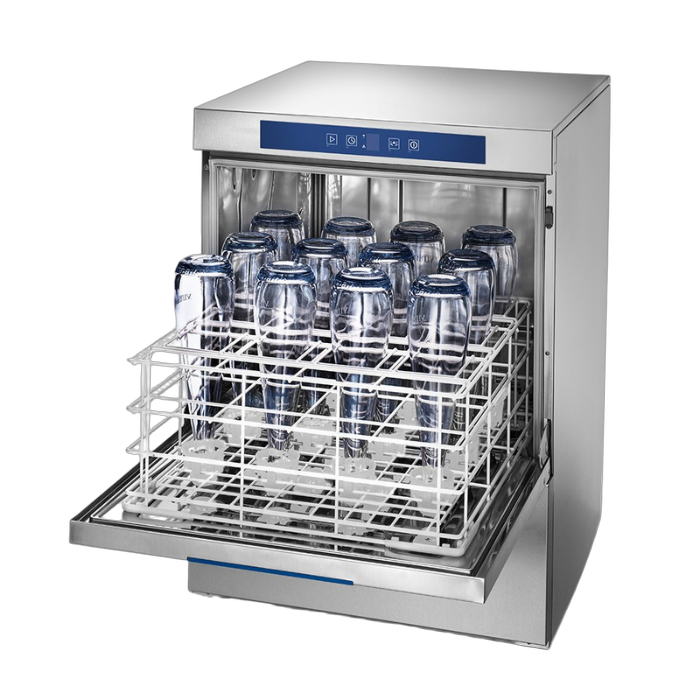
- Core difference: Undercounter glasswashers are optimised for delicate glassware with lower wash pressure and shorter cycles; underbench dishwashers handle mixed loads (plates, cutlery, utensils, glasses) with higher pressure and longer sanitisation cycles.
- Purchase price: Undercounter glasswashers cost $2,000-$8,000 vs underbench dishwashers at $3,000-$10,000 (2026 AUD) - dishwashers cost more due to larger rack capacity and higher-temperature wash systems.
- Glass quality: Glasswashers use lower water pressure and gentler cycles that protect thin-walled wine, cocktail and craft beer glasses; dishwashers risk etching, chipping and thermal shock on delicate stems.
- Versatility: Dishwashers handle plates, cutlery, serving utensils and glasses in one machine; glasswashers are glass-only with no mixed-load capability.
- Cycle time: Glasswashers run 30-120 second cycles (up to 40 racks/hour); dishwashers run 60-180 second cycles (up to 30 racks/hour) with higher rinse temperatures.
- Decision threshold: If 70%+ of your wash load is glassware and glass quality matters to your brand, a dedicated undercounter glasswasher is the right investment. If you need one machine for everything in a small kitchen, an underbench dishwasher covers more ground.
- Both undercounter glasswashers and underbench dishwashers are available from verified Australian suppliers - undercounter glasswashers and underbench dishwashers on HospitalityHub.
Undercounter glasswasher vs underbench dishwasher: Which machine belongs behind your bar? (2026 comparison)
Undercounter glasswashers and underbench dishwashers occupy the same physical space behind a bar or under a counter, but they solve different problems. A glasswasher protects delicate stemware and delivers spotless results without polishing. A dishwasher handles everything from plates to pans but treats all items the same way - which means delicate wine glasses get the same high-pressure, high-temperature treatment as a saucepan. The result is etched, cloudy glassware that damages your brand presentation.
This comparison guide puts both machines side by side on wash quality, cost, versatility and the decision factors that matter at procurement stage. To compare pricing, get quotes for commercial undercounter glasswashers or get quotes for underbench dishwashers on HospitalityHub.
Operations where this comparison matters most:
- Cocktail bars and wine bars where glass quality is part of the brand experience
- Small restaurants deciding whether to buy one multi-purpose machine or a dedicated glasswasher plus a dishwasher
- Cafes with limited under-counter space for only one warewashing unit
- Pubs and clubs replacing ageing units and reconsidering which machine type to install
Compare the core differences
Before comparing costs, confirm which machine type matches your primary wash load. The table below covers the capabilities that drive the decision.
Factor | Undercounter Glasswasher | Underbench Dishwasher |
|---|---|---|
Primary load |
Glasses only - wine, beer, cocktail, spirit |
Mixed - plates, cutlery, utensils, glasses |
Wash pressure |
Lower - protects thin-walled and stemmed glassware |
Higher - needed for baked-on food and grease removal |
Cycle time |
30-120 seconds (up to 30-40 racks/hour) |
60-180 seconds (up to 30 racks/hour) |
Rinse temperature |
55-70°C (lower to reduce thermal shock on glass) |
82-90°C (higher for food safety sanitisation) |
Rack size |
400 × 400 mm or 500 × 500 mm |
500 × 500 mm standard |
Glass result |
Spotless, streak-free with water treatment |
Risk of etching, spots and thermal shock on delicate glass |
Evaluate the key specifications
With the core differences clear, these are the specifications that determine which machine delivers better value for your specific operation.
Specification | Typical Range | Buyer Consideration |
|---|---|---|
Glass throughput |
Glasswasher: 500-800/hr; Dishwasher: 300-600/hr |
Glasswasher's faster cycle means higher glass throughput during peak service |
Power supply |
Both: 10A or 15A models available |
10A units plug into standard outlets; 15A units heat faster and suit higher volumes |
Water softening |
Built-in on mid-range glasswashers; rare on dishwashers |
Built-in softening on glasswashers is a key differentiator for streak-free results |
Internal clearance height |
Glasswasher: 240-310 mm; Dishwasher: 310-400 mm |
Dishwashers handle taller items (plates, jugs) that glasswashers cannot fit |
Chemical system |
Both: auto-dosing standard on mid-range and above |
Glasswasher-specific chemicals are formulated for lower-temperature rinse and glass protection |
Compare the full cost (2026 prices)
Purchase price is only part of the picture. The table below models the full 5-year cost for each machine type.
Category | Undercounter Glasswasher | Underbench Dishwasher |
|---|---|---|
New unit purchase |
$2,000-$8,000 |
$3,000-$10,000 |
Annual running cost (standard use) |
$1,200-$2,200 |
$1,500-$3,000 |
5-year TCO |
$8,000-$19,000 |
$10,500-$25,000 |
Polishing labour saved/year |
$4,000-$10,000 (with water treatment) |
$0-$2,000 (glasses still need polishing) |
Breakage cost |
Lower - gentler cycle reduces chipping |
Higher - delicate glass breakage at up to 2-5% per month |
The glasswasher typically costs less to buy and run, and delivers significant labour savings through reduced polishing. The dishwasher's advantage is versatility - one machine for everything. For venues where glass quality matters, a dedicated undercounter glasswasher at $2,000-$8,000 delivers better ROI. For a glasswasher, get quotes for commercial undercounter glasswashers or for a dishwasher, get quotes for underbench dishwashers from verified Australian suppliers.
Decision framework - undercounter glasswasher vs underbench dishwasher
Decision Factor | Choose Undercounter Glasswasher | Choose Underbench Dishwasher |
|---|---|---|
Primary wash load |
70%+ glassware - bar, cocktail lounge, wine bar |
Mixed load - plates, cutlery, utensils and some glasses |
Glass quality priority |
High - glass presentation is part of the brand experience |
Acceptable - standard glassware where spotless finish is less critical |
Space for two machines |
Yes - glasswasher at bar plus dishwasher in kitchen |
No - one machine must handle everything |
Glass type |
Thin-walled wine, cocktail stems, craft beer glasses |
Standard tumblers, pint glasses, robust barware |
Polishing labour |
Wants to eliminate polishing entirely (with water treatment) |
Accepts some polishing as part of the workflow |
Evaluate suppliers
You are ready to go to market. Use this checklist to assess each supplier against the same criteria.
Factor | What to Ask |
|---|---|
Glass result |
Can I see a glass washed in this machine with my local water supply before committing? |
Water treatment |
Is water softening built-in? Do you offer reverse osmosis integration? |
Glass breakage rate |
What breakage rate should I expect for thin-walled wine and cocktail glasses? |
Cycle options |
What cycle times are available and which is recommended for my glass types? |
Chemical system |
Proprietary chemicals only or compatible with third-party suppliers? |
Warranty |
What is covered and for how long? |
Service network |
Do you have technicians in my state? Breakdown response time? |
Rental package |
Do you offer fixed-price weekly packages including machine, chemicals and servicing? |
Power requirement |
10A or 15A? What power point does my bar have? |
Noise |
What is the rated dB level? This sits under a customer-facing bar counter. |
Frequently asked questions
Can i wash glasses in an underbench dishwasher?
Yes, but with trade-offs. Underbench dishwashers use higher water pressure and rinse temperatures designed for plates and cutlery. Delicate wine glasses, cocktail stems and thin-walled craft beer glasses are at higher risk of etching, chipping and thermal shock compared to a dedicated undercounter glasswasher.
Is it worth having both an undercounter glasswasher and an underbench dishwasher?
For venues with a bar and a kitchen, yes. A glasswasher behind the bar handles glasses at speed during service; a dishwasher in the kitchen handles plates, cutlery and utensils. Combined purchase cost is $5,000-$18,000 and eliminates glass-quality compromises.
What is the glass breakage difference between the two machine types?
Undercounter glasswashers typically produce 1-2% monthly breakage on standard glassware. Underbench dishwashers running delicate stems at high pressure and temperature can see 3-5% monthly breakage, which adds $500-$2,000/year in replacement glass costs for a busy bar.
Do both machine types meet the same Australian compliance standards?
Both must meet AS/NZS 3500 for plumbing, AS/NZS 3000 for electrical and state food safety authority sanitisation temperature requirements. Dishwashers typically achieve higher rinse temperatures (82-90°C) which may be required for food-contact items but is not necessary for glass-only applications.
Which machine has a faster payback period?
A dedicated undercounter glasswasher with water treatment pays back faster because it eliminates $4,000-$10,000/year in polishing labour. An underbench dishwasher's payback depends on how much hand-washing labour it replaces, which varies by venue.
Summary
- Undercounter glasswashers deliver spotless glass quality with lower pressure and gentler cycles
- Underbench dishwashers handle mixed loads but risk etching and chipping delicate glassware
- Glasswashers cost less to buy, less to run and save more in polishing labour
- Dishwashers are the right choice when one machine must handle everything in a small kitchen
- Venues with both a bar and a kitchen should consider one of each for best results
- Glass breakage on dishwashers can cost $500-$2,000/year more than on a dedicated glasswasher
Don't waste time contacting suppliers individually. HospitalityHub gives you direct access to verified Australian commercial warewashing suppliers - where hospitality buyers request and compare multiple quotes so they can buy with confidence.
- Get quotes for commercial undercounter glasswashers - contact multiple verified suppliers with a single enquiry
- Get quotes for underbench dishwashers - compare pricing, rack size and features
- Contact suppliers directly - speak to specialists who service your state
→ Get and compare commercial undercounter glasswasher quotes now → https://www.hospitalityhub.com.au/buy/commercial-undercounter-glasswasher


-160x160-state_article-rel-cat.png)



-205x205.png)