

Key takeaways
- The squeeze: Thin margins and a hard-to-fill roster are pushing operators toward equipment that removes labour hours rather than adding covers.
- The clear signal: Strong interest in labour-saving kit, floor-cleaning robots for the close-down clean and service robots that run plates and clear tables.
- Season, read honestly: Q2 is autumn into winter here, so frozen, ice cream and outdoor categories sit in their quiet window. That is the calendar, not a trend.
- Scope, read honestly: Big chain expansion and broad automation rollouts are real but mostly buy through their own channels, so they are not marketplace demand.
- The takeaway: Buy where equipment offsets your most repetitive labour, and match the machine to your venue before you compare price.
Q2 2026 has a clear theme running through hospitality purchasing: operators are buying to take cost out, not to chase growth. With margins thin and the roster hard to fill, the equipment drawing the most attention is the kind that removes labour hours from the day. This piece sets out what that demand signal is telling us, two honest caveats about how to read it, and how to buy around the squeeze without over-committing.
Why the pressure is on margins
The maths facing operators is unforgiving. Accommodation and food services pays a median full-time wage of about $1,300 a week, below the all-industries median of $1,741, according to Jobs and Skills Australia, and that relative gap drives high turnover and constant recruitment. Filling shifts remains hard: at points in recent years close to half of accommodation and food services businesses reported vacancies, and hospitality has been one of the sectors most exposed to a tight labour market.
Demand, meanwhile, is not collapsing but it is not booming either. Cafes and coffee shops are tracking to $15.9 billion in 2025-26 with growth easing to about 1.3%, per IBISWorld, as cost-of-living pressure tempers how often people visit. More covers are off the table for many venues, so the route to a healthier margin runs through cost, and labour is the biggest lever.
The demand signal: labour-saving kit
That is the case behind strong interest in labour-saving equipment this quarter. Two categories stand out: floor-cleaning robots that handle the close-down clean, and service robots that run plates and clear tables. We treat that interest as a real-world demand signal driven by cost, not as a shift in quote share.
- Floor-cleaning robots: These take on the repetitive end-of-night scrub so staff are not kept back after close. On hard-floor venues they run a consistent plan unsupervised. Compare options among floor cleaning robots and heavier-duty commercial cleaning robots.
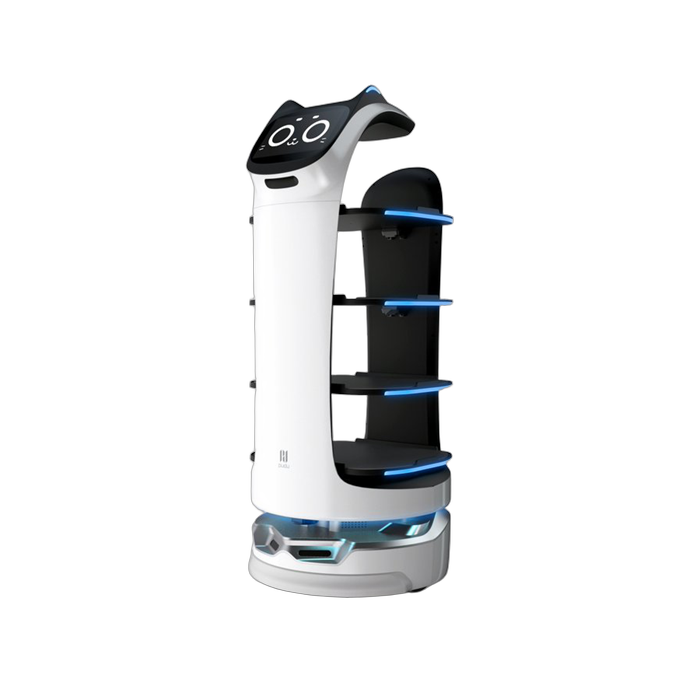
- Service robots: These run food from the pass and clear dirties, absorbing the walking that eats a floor shift. See the range of robot waiters for how payload and tiers vary.
The common thread is that both remove a repetitive, physically demanding task rather than replacing a role. Staff shift to guest-facing work and detail cleaning while the machine handles the grind. For a deeper look at how one of these categories stacks up on price and fit, our companion cost versus value guide walks through the same buy-or-outsource discipline.
Two honest caveats
Reading a demand signal well means knowing what not to read into it. Two caveats keep the picture straight:
- Season: Q2 is autumn into winter in Australia, so frozen, ice cream and outdoor categories naturally sit in their quieter window. That is the calendar, not a market trend, and we are not reading anything into it.
- Scope: Big chain expansion and broad automation rollouts are real, but they mostly buy through their own channels rather than a marketplace, so they are not read here as marketplace demand. The labour-saving signal stands on its own without them.
How to buy around the squeeze
If cost is driving your purchasing, a few principles keep the spend disciplined:
- Target your most repetitive hours: Buy where a machine offsets the same task done over and over, the close-down clean or the long plate run, not a one-off job.
- Match the machine to the venue: A unit built for a big open floor will struggle in a tight room. Confirm fit against your actual layout before price.
- Weigh buy against lease: Leasing lowers the upfront hit and suits a trial; buying suits long-term owners who can manage upkeep.
- Budget total cost of ownership: Charging, cleaning, consumables and support all add up. Cost the whole life, not the sticker.
A realistic scenario
Picture a mid-size Melbourne venue heading into winter with covers flat and overtime creeping up. Two costs stand out: staff kept back an hour after close to scrub floors, and a long floor run tying up service on busy nights.
Rather than chase more covers in a quiet season, the operator targets those two repetitive tasks. A floor-cleaning robot takes the close-down scrub so nobody stays back, and a service robot runs plates on the busy nights so the floor team stays with guests. Neither cuts a role, they change what the shift is spent on, and the saving lands on the exact hours that were bleeding margin. That is buying around the squeeze: the season is quiet, so the money goes into cost control, not expansion.
Frequently asked questions
Why is labour-saving equipment in demand right now?
Because margins are thin and shifts are hard to fill. When more covers are not the answer, cutting the cost of repetitive labour is, and floor and service robots target exactly that.
Does the quiet Q2 in some categories mean the market is soft?
No. Q2 is autumn into winter, so frozen, ice cream and outdoor lines sit in their normal seasonal lull. That is the calendar, not a market trend.
What about big chains rolling out automation?
Large-scale expansion and automation are real, but chains mostly buy through their own channels, so that activity is not read as marketplace demand. The labour-saving signal here stands on its own.
Should I buy or lease labour-saving equipment?
Lease to trial the idea or protect capital; buy if you want to own it long term and can manage maintenance. Either way, target your most repetitive labour first.
What matters most
The Q2 2026 story is cost, not growth. Operators are buying equipment that removes labour hours because margins are thin and rosters are hard to fill, and the strongest interest sits with floor-cleaning and service robots that take on the repetitive grind. Read the season and the chain-channel scope honestly, target your most repetitive hours, match the machine to your venue, and the spend becomes a saving rather than a punt.
Looking to take cost out of your roster this quarter? Compare quotes on labour-saving cleaning robots across Australia here.

