
Hot Food Display

Join hospitality buyers comparing supplier quotes and buying with confidence. Free, quick and easy.


How HospitalityHub works
Tell us what you need
Answer a few quick questions about the equipment you're looking for.
Get personalised quotes
Receive tailored quotes from relevant Australian suppliers.
Compare and choose
Compare quotes, ask questions and choose the best option for you.
 Save time
 Compare quotes
 Buy with confidence
Save time, compare quotes & buy with confidence
Hot Food Display | Cabinet, Bar & Plate Suppliers
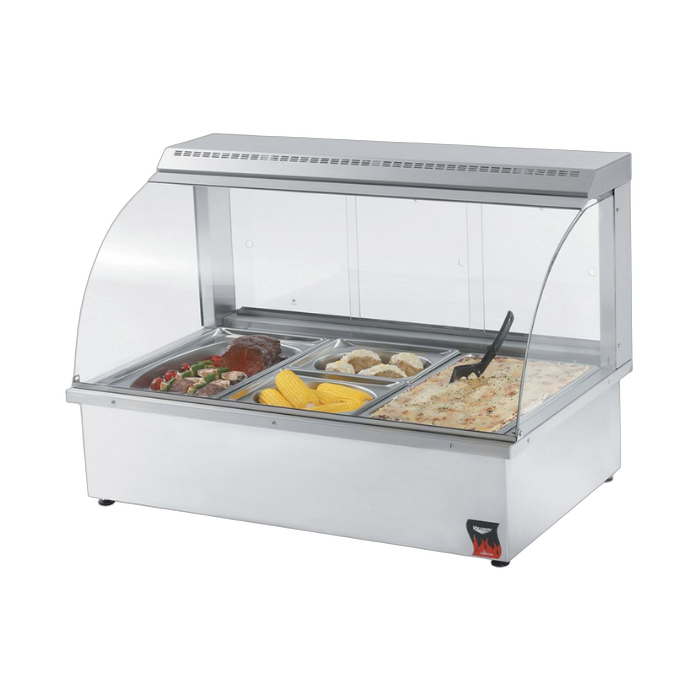
Unlike cold food displays, hot food displays are designed to keep food hot and ready for purchase hours after being cooked. They can be utilised in a range of commercial settings and can hold a variety of food types and shapes.
Hot food displays allow for constant food availability and make a great addition to takeaway shops, convenience stores, delis, bakeries, restaurants and grocery stores by encouraging quick customer service. Food displays can be used to showcase various food items such as rotisserie chicken, chicken wings, wedges, pizzas, pies, sausage rolls, burgers, buns, and croissants as well as ready to serve cafeteria style food.
They also prevent external contaminants from spoiling the food by completely enclosing it in a case. This reduces the chance of dust, dirt, and debris as well as pests such as flies, birds and insects damaging the food resulting in unnecessary wastage.
Hot food displays keep food at a safe temperature using radiant or convection heat transfer which allows the food to remain moist, flavorful, and appealing for a long period of time. As a result, this cuts down on the overall cooking time because the food can be prepared in much larger batches. This can also save staff time and reduces the need for additional reheating appliances.

Hussmann provides comprehensive climate control solutions to the food and beverage markets in many countries around the world, with a special focus on energy efficiency, sustainability, innovation, and quality. In the Oceania region, we’re a leading supplier of commercial refrigeration systems and services to supermarket operators and independent retailers. Our promise to ...

- Bain-marie: A heated water bath that keeps food warm and moist.
- Heated shelves: Shelves that are heated from below to keep food warm.
- Hot plates: Plates that are heated from below to keep food warm.
- Heat lamps: Lamps that emit heat to keep food warm.
- Food warmers: Cabinets that keep food warm and moist.
- Steam tables: Tables that use steam to keep food warm and moist.
- Convection ovens: Ovens that use hot air to keep food warm.
- Rotisseries: Machines that rotate food to keep it warm and moist.
- Warming drawers: Drawers that keep food warm and moist.
- Daily cleaning: The unit should be cleaned daily, including wiping down the exterior and interior surfaces, removing any food debris, and sanitizing the surfaces.
- Weekly cleaning: The unit should be deep cleaned once a week, including removing the shelves and cleaning them thoroughly, cleaning the heating elements, and checking the wiring for any damage.
- Temperature checks: The temperature of the unit should be checked regularly to ensure it is operating within the recommended range. Any issues with temperature should be addressed immediately.
- Filter replacement: If the unit has a filter, it should be replaced regularly to ensure proper air circulation and prevent the buildup of grease and other contaminants.
- Electrical maintenance: The electrical components of the unit should be checked regularly for any signs of wear or damage. Any issues should be addressed immediately to prevent safety hazards.
- Temperature control: The unit should have a thermostat or temperature control system to regulate the temperature of the food and prevent it from becoming too hot or cold.
- Heat-resistant glass: The glass used in the display unit should be heat-resistant to prevent it from shattering or cracking due to the high temperatures.
- Ventilation: The unit should have proper ventilation to prevent the buildup of steam and condensation, which can lead to bacterial growth and spoilage of the food.
- Automatic shut-off: Some units have an automatic shut-off feature that turns off the heating element if the temperature gets too high, preventing overheating and potential fires.
- Food safety guidelines: The unit should comply with food safety guidelines and regulations, including proper labeling, storage, and handling of the food.
Hot Food Display Costs and Supplier Insights
Buy a Hot Food Display Near Me

 Reach valuable hospitality buyers in minutes
 Promote key products & content
 Drive cost effective & measurable sales