
Key takeaways
- What they cost: Soft serve ice cream machines on HospitalityHub average around $9,000, with compact countertop units from roughly $2,500 and high-output floor-standing machines running to $15,000 or more.
- What sets the price: Countertop versus floor-standing, barrel count, hopper capacity, pasteurisation, and output rate are the main cost drivers.
- Where they fit: Cafes and dessert shops adding a treat, through to dedicated ice cream and frozen yoghurt venues where soft serve is the core trade.
- The compliance line: Dairy mix is a potentially hazardous food, so machines must hold mix at safe temperatures under FSANZ Standard 3.2.2.
- The decision: Match output and barrels to your volume and flavour range, then weigh a lower countertop price against floor-standing capacity.
A soft serve ice cream machine freezes and aerates a dairy or plant-based mix into smooth soft serve on demand, and it can anchor a whole dessert business or add a high-margin treat to an existing menu. The range is wide, from compact countertop units to high-output floor-standing twin-twist machines, and price follows capacity and features closely. This guide covers what soft serve machines cost in Australia in 2026, the specs that shape the price, and how to match one to your venue before you request quotes.
Countertop or floor-standing: the decision that drives cost
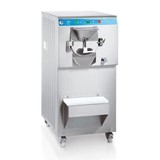
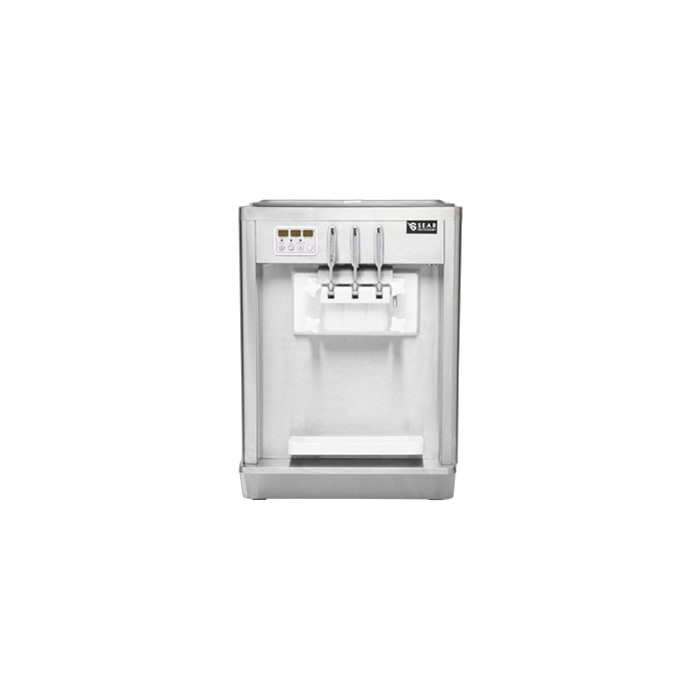
The first and biggest decision is form factor, because it maps directly to volume and price. Small countertop units serving a modest range of flavours are ideal for businesses offering ice cream as an ancillary treat, such as a cafe or takeaway adding one dessert line. Large floor-standing units serving high volume and a wider flavour range suit serious ice cream purveyors who see soft serve as integral to their trade.
The other structural choice is barrel and flavour configuration. A single-barrel machine serves one flavour; a twin-barrel serves two; a twin-twist adds a combined swirl of both from a third spout. More barrels mean more flavours and higher output, and a higher price. Hopper capacity, the volume of mix held ready and chilled above the freezing cylinder, scales with output and matters for keeping up through a rush.
What a soft serve machine costs in 2026
Price tracks form factor, barrels, and output. As a working guide for the Australian market:
- Countertop single or twin: Roughly $2,500 to $7,000. Compact units for cafes, takeaways, and food trucks adding soft serve as a treat.
- Floor-standing twin or twin-twist: Around $7,000 to $12,000. Higher output and flavour range for dessert shops and busy venues.
- High-output and pasteurising systems: $12,000 to $15,000+. Large hoppers, fast recovery, and built-in pasteurisation for high-volume dedicated operators.
The national average sits near $9,000. Features shift the total: larger hoppers, higher output per hour, adjustable overrun (the air whipped into the mix), automatic wash cycles, and pasteurisation all add to the price tag. To compare configurations, compare soft serve ice cream machine quotes from Australian suppliers against your volume and flavour plans, and for scoop or gelato formats see the commercial ice cream and gelato machine category.
| Machine class | Format | Indicative price | Best fit |
|---|---|---|---|
| Countertop single/twin | Countertop | $2,500 - $7,000 | Cafes, takeaways, food trucks |
| Floor-standing twin-twist | Floor-standing | $7,000 - $12,000 | Dessert shops, busy venues |
| High-output / pasteurising | Floor-standing | $12,000 - $15,000+ | Dedicated high-volume operators |
The specs that shape the price
When you request quotes, these are the factors that change the total:
- Output per hour: How much soft serve the machine produces and how fast it recovers after serving determines whether you keep up at peak. Higher output costs more.
- Barrels and flavours: Single, twin, or twin-twist sets your flavour range and throughput, and is a core price driver.
- Hopper capacity: Larger hoppers hold more chilled mix ready to serve, reducing refills during busy periods.
- Overrun control: Adjustable air injection lets you tune texture and yield. Gravity-fed and pump systems differ in the overrun they achieve.
- Pasteurisation and wash cycles: Built-in heat treatment extends mix life and reduces daily strip-down, adding cost but saving labour in high-volume settings.
Food safety and compliance
Soft serve mix is dairy-based and counts as a potentially hazardous food, so temperature control is not optional. Good machines hold the mix in the hopper below 5 degrees in auto and standby modes and keep product at safe serving and storage temperatures overnight, which is exactly what the food safety rules require. Under FSANZ Standard 3.2.2, potentially hazardous food must generally be kept at 5 degrees or colder unless you can show a safe alternative, as Food Standards Australia New Zealand sets out. Machines with pasteurisation or reliable overnight refrigeration make compliance easier, so factor food safety into the buying decision, not just output. For the wider cold-chain picture behind a frozen-dessert operation, including storing backup mix and tubs, the cool room and freezer room prices and buying guide is a useful companion.
A realistic scenario
Picture a Melbourne dessert cafe where soft serve is becoming a signature line, currently run on a small countertop unit that cannot keep up on weekends.
A floor-standing twin-twist machine at around $10,000, with a large hopper, overnight refrigeration below 5 degrees, and fast recovery, lets the cafe serve two flavours plus a twist through the weekend rush without running short or breaching temperature control. Overrun control tunes the texture and improves yield per litre of mix. It is a real step up in spend from the countertop unit, but for a venue where soft serve drives trade, the extra capacity and compliance headroom pay off. Pairing it with a slush machine can broaden the frozen-treat offer further.
Frequently asked questions
Countertop or floor-standing?
Countertop suits venues adding soft serve as a treat with modest volume; floor-standing suits higher volume and wider flavour range. Match the form factor to how central soft serve is to your trade.
What is overrun and why does it matter?
Overrun is the air whipped into the mix during freezing. More overrun gives a lighter product and more servings per litre of mix, improving yield. Adjustable overrun lets you tune texture and cost per serve.
Do I need pasteurisation?
Built-in pasteurisation extends mix life and cuts daily cleaning, which suits high-volume operators. Smaller venues can meet food safety through reliable refrigeration and regular cleaning instead. It adds cost but saves labour.
What temperature must the mix be kept at?
As a dairy-based potentially hazardous food, mix should generally be held at 5 degrees or colder under FSANZ Standard 3.2.2 unless a safe alternative is demonstrated. Good machines maintain this in the hopper in auto and standby modes.
What matters most
A soft serve machine is a capacity-and-compliance decision. Match output, barrels, and hopper size to your volume and flavour range, choose countertop or floor-standing by how central soft serve is to your trade, and insist on reliable temperature control to meet FSANZ 3.2.2. Get the fit right and a high-margin dessert runs smoothly through your busiest periods. Get it wrong and you either run short at peak or overspend on capacity a small cafe never uses.
Ready to compare countertop and floor-standing options and pricing on soft serve machines? Get quotes from soft serve suppliers across Australia here. You can also explore commercial slush machines to widen your frozen-treat range.