

Key takeaways
- What they cost: Pot and pan washers on HospitalityHub run from about $5,000 to $15,000, averaging around $10,000, depending on type and size.
- What sets the price: Machine type, capacity, wash power, and water and energy efficiency drive the cost.
- Where they fit: Busy kitchens, bakeries, and caterers with a heavy load of pots, pans, trays, and bulky washware.
- The payback: The machine ends slow, hard hand-scrubbing, freeing staff and getting a consistent clean.
- The decision: Match the type and capacity to your washware and space, then check wash power and running costs before you compare price.
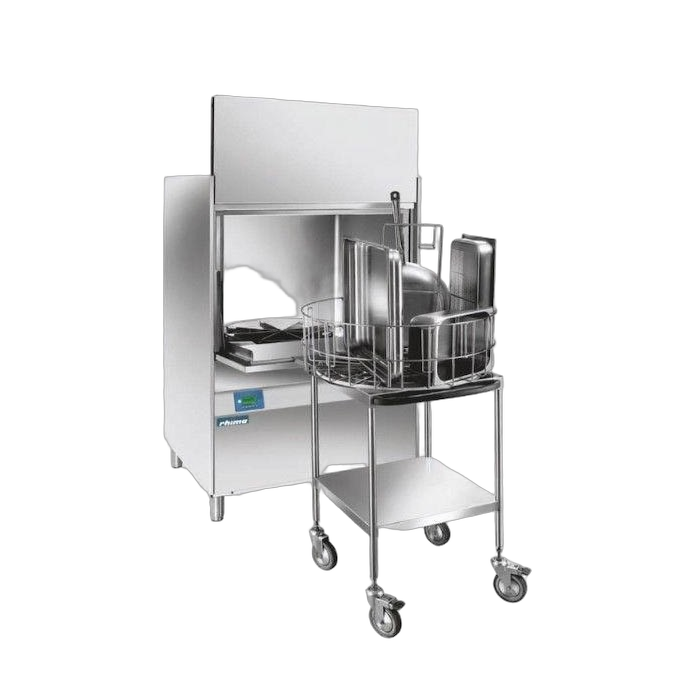
A pot and pan washer takes on the toughest job in the kitchen: scrubbing baked-on food off heavy pots, pans, and trays. A normal dishwasher cannot handle that load, so without a dedicated machine the work falls to staff at the sink. That is slow, tiring, and gives an uneven result. A pot washer does it faster and more consistently, and frees your team for better work. This guide covers what pot and pan washers cost in Australia in 2026, the specs that matter, and how to match one to your kitchen.
The machine types, and how they drive cost
The type of machine is the first thing that sets both the fit and the price. There are a few main formats:
- Undercounter pot washer: A compact unit that fits under a bench, for kitchens with a modest load and limited floor space.
- Upright or hood-type washer: A tall machine with a big entry height that takes large pots, pans, and trays. The workhorse for busy kitchens.
- Continuous-motion soak system: A powered soak tank with moving water that loosens baked-on food while staff work alongside it, for very high volume.
Beyond type, size and wash power set the cost. A bigger machine with a taller entry, stronger pumps, and oscillating wash arms handles heavier soil and larger loads, and costs more. Build quality matters too, since these machines take a beating. A well-built pot washer in stainless steel runs reliably for years, which is where the value sits.
What a pot and pan washer costs in 2026
Price tracks type, size, and power. As a rough guide for the Australian market:
- Compact undercounter units: About $5,000 to $8,000. Smaller machines for cafes and kitchens with a modest pot load.
- Upright and hood-type washers: Around $8,000 to $12,000. Tall, high-capacity machines for busy restaurants and bakeries.
- Large and continuous-motion systems: $12,000 to $15,000+. High-volume soak systems and large washers for caterers and production kitchens.
The average sits near $10,000. Bigger entry heights, stronger pumps, heat recovery, and efficient filter systems all push the price tag up. To compare types and sizes, compare pot and pan washer quotes from Australian suppliers, and weigh one against a general commercial dishwasher or a utensil washer if your load is lighter.
| Machine class | Type | Indicative price | Best fit |
|---|---|---|---|
| Compact | Undercounter | $5,000 - $8,000 | Cafes, modest pot loads |
| High-capacity | Upright / hood-type | $8,000 - $12,000 | Busy restaurants, bakeries |
| Very high volume | Continuous-motion soak | $12,000 - $15,000+ | Caterers, production kitchens |
The specs that shape the price
When you request quotes, these are the things that change the total:
- Machine type: Undercounter, upright, or continuous-motion. This sets both the capacity and the base price.
- Entry height and capacity: A taller entry takes bigger pots and trays. More capacity per cycle handles a heavier load.
- Wash power: Strong pumps and oscillating wash arms shift baked-on food that a normal dishwasher leaves behind.
- Water and energy efficiency: Fine filter systems, heat recovery, and low water use per cycle keep running costs down.
- Build quality: Heavy-duty stainless steel and easy access to the pump and parts mean less downtime and a longer life.
Food safety and running costs
Two things sit alongside the purchase price. First, food safety. Under FSANZ Standard 3.2.2, equipment that touches food must be kept clean and sanitary, and sanitising means destroying microorganisms, not just removing dirt, as Food Standards Australia New Zealand sets out. A machine that sanitises with a hot final rinse does this reliably, which hand-washing struggles to match. Check the machine reaches the rinse temperature needed to sanitise. Second, running costs. A pot washer uses water, energy, and detergent every cycle, so an efficient machine with heat recovery and a good filter system pays off over time. For how a pot washer fits alongside your other warewashing, the guide to installing and maintaining pass-through dishwashers is a useful companion.
A realistic scenario
Picture a busy bistro in Melbourne where the kitchen porter spends hours each night scrubbing baked-on trays and stockpots by hand. Staff turnover is high and the job is the one nobody wants.
An upright pot washer at around $10,000 clears that load. Its tall entry takes the big stockpots and trays, and strong wash arms shift the baked-on food. The porter loads and unloads instead of scrubbing, and shifts to prep and other work. The clean is consistent and the rinse sanitises. It is a real outlay, but it removes the worst job in the kitchen and gets pots back into service faster.
Frequently asked questions
Why not just use a commercial dishwasher?
A normal dishwasher cannot shift baked-on food from heavy pots and trays, and they often will not fit. A pot washer has a taller entry and stronger wash power built for that load, so it does the job a dishwasher leaves behind.
Which type suits my kitchen?
Undercounter suits cafes with a modest load and tight space. Upright or hood-type suits busy restaurants and bakeries. Continuous-motion soak systems suit very high volume caterers and production kitchens. Match the type to your load.
Does a pot washer meet food safety rules?
A good machine sanitises with a hot final rinse, which meets the clean-and-sanitary duty under FSANZ Standard 3.2.2 more reliably than hand-washing. Confirm the rated rinse temperature is high enough to sanitise before you buy.
What are the ongoing costs?
Budget for water, energy, and detergent each cycle, plus regular servicing and filter cleaning. An efficient machine with heat recovery and a good filter system keeps these costs down over its life.
What matters most
A pot and pan washer removes the hardest, slowest job in the kitchen. Match the type and capacity to your washware and space, check the wash power handles your heaviest soil, and confirm the rinse sanitises for FSANZ 3.2.2. Weigh the running costs against the labour it saves. Get the fit right and it frees your team and gets pots back into service fast. Get it wrong and you either buy more machine than you need or one that cannot clear your load.
Ready to compare types, capacity, and pricing on pot and pan washers? Get quotes from pot and pan washer suppliers across Australia here.


