
Key Takeaways
- Minimise movement to maximise profit. Every extra step your bartender takes is lost time and money. A well-designed layout can reduce bartender movement by 20-30%, directly increasing the number of drinks they can serve per hour.
- Create the "golden triangle". The most critical layout principle is to have the ice well, POS terminal, and speed rail all within one step of each other. This forms an ergonomic workstation that dramatically accelerates service.
- Double your ice wells, not your staff. During a busy service, the ice well is the biggest bottleneck. Installing a second, smaller ice well at the other end of the bar can often do more to increase speed than hiring an extra bartender.
- Your glassware station is a hidden speed trap. Store your most-used glassware (highballs, wine glasses) closest to the primary service area. Using under-counter glass chillers not only improves drink quality but also keeps glassware within immediate reach.
- The "first in, last out" principle doesn't apply to bars. A linear layout where drinks are made at one end and paid for at the other creates chaos. The most effective layout allows a bartender to serve, pour, and process payment all from one optimised station.
- A faster bar is a safer bar. A layout focused on ergonomics, like correct bar heights and anti-fatigue matting, is a critical WHS requirement that reduces costly staff injuries and keeps your team productive for longer.
- Technology completes the workstation. Supercharge your physical layout with smart tech. Multiple tablet-based POS systems and integrated payment terminals allow bartenders to complete entire transactions without moving, creating truly self-sufficient and high-speed service points.
Introduction: The new speed imperative in Australian bars
In the fast-paced Australian hospitality scene of October 2025, speed is everything. With rising labour costs and a persistent shortage of skilled bartenders, every moment of your team's time is a valuable commodity. Customers are back in full force, but their expectation for quick, efficient service has never been higher. A long wait at the bar is no longer a minor inconvenience; it's a primary reason for a negative review and lost repeat business.
Many bar owners believe that the only way to get faster is to hire more staff, a costly solution that isn't always feasible. The truth is, the biggest handbrake on your bar's speed and profitability is often hidden in plain sight: your physical layout. Small, strategic changes to the placement of your equipment and the design of your workstations can unlock significant gains in efficiency, allowing your existing team to serve more customers, faster. This article provides a practical guide on the minor layout adjustments that can deliver a major boost to your bar's speed and revenue, without the need for a costly renovation.
The high cost of wasted steps
An inefficient bar layout silently drains your profits every single shift. The primary culprit is wasted movement. Every unnecessary step a bartender takes to find a glass, grab a garnish, or walk to the other end of the bar to process a payment is non-productive time.
A recent industry analysis found that in a poorly designed bar, a bartender can walk several kilometres during a single busy shift. Let's quantify that. If a bartender takes just 10 extra seconds per drink to walk and find ingredients, and they make 300 drinks in a night, that's nearly an hour of wasted time. In that hour, they could have served another 30-40 drinks, representing hundreds of dollars in lost revenue.
Diagnose your layout with a "spaghetti diagram"
You can't fix a problem you can't see. The best way to identify your layout's weaknesses is to create a simple "spaghetti diagram":
- Sketch a simple floor plan of your bar area.
- During a busy service, watch one bartender and trace their every step with a pen for 15 minutes.
- The resulting diagram will likely look like a plate of spaghetti, instantly highlighting areas of excessive travel, backtracking, and bottlenecks. This is your roadmap for improvement.
Creating ergonomic workstations: The "golden triangle"
The secret to a high-speed bar is not to have your bartenders run faster, but to ensure they barely have to move at all. The most effective layouts are built around individual, self-sufficient workstations, often referred to as "cocktail stations."
The core of each station is the "golden triangle" of service:
- The Ice Well: This is the centre of the universe for any bartender. It should be directly in front of them.
- The Point of Sale (POS) Terminal: The POS should be immediately to one side of the ice well, within easy arm's reach.
- The Speed Rail: Containing your top-selling spirits, this should be attached to the front of the ice well.
When these three elements are in place, a bartender can greet a customer, take their order, make 80% of the most common drinks, and process the payment, all while barely moving their feet.
Optimising your glassware and garnish stations
Two of the most common bottlenecks that force bartenders to leave their station are glassware and garnishes.
Glassware strategy
Your most frequently used glasses are a high-volume commodity. Storing them at the far end of the bar or on high, hard-to-reach shelves is a critical error.
- Prioritise placement: Your high-use glasses (e.g., highballs, wine glasses, pint glasses) must be stored directly under or above the main service area.
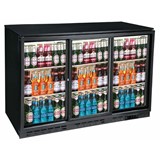
- Invest in under-counter glass chillers: This is a fantastic dual-purpose investment. Not only does it allow you to serve perfectly chilled glasses, a significant quality improvement, but it also provides accessible, point-of-use storage for your most common glassware.
Garnish station efficiency
A disorganised garnish station is a speed killer. Prepping garnishes during a busy service is a waste of valuable time.
- Use a professional garnish tray: A simple, multi-compartment tray keeps all your pre-cut citrus, olives, and herbs in one organised place.
- Location, location, location: The garnish tray should be located immediately next to the ice well, not at the other end of the bar.
The strategic placement of POS terminals and ice wells
Of all your equipment, the placement of your POS terminals and ice wells has the single biggest impact on your service speed.
A realistic scenario: The one-POS-wonder
A busy cocktail bar in Melbourne has a long, 10-metre bar, but only one POS terminal located at the far right end. On a busy Friday night, two bartenders are working.
- The problem: One bartender makes a round of cocktails at the left end of the bar. They then have to walk the entire length of the bar, wait for the other bartender to finish a transaction, and then process the payment. The customer is left waiting, and the bartender's entire workflow is disrupted.
- The low-cost solution: The bar owner invests in a second, tablet-based POS terminal and installs it at the left end of the bar. Now, each bartender has their own dedicated workstation. They can serve, mix, and take payment all within a two-metre zone. The result is a dramatic increase in service speed and a less stressful environment for the team.
The same logic applies to ice. A long bar with only one ice well forces bartenders to constantly cross paths, creating a major bottleneck. Installing a second, smaller ice well can be one of the most effective investments you ever make.
Small changes that deliver big results
You don't need a full renovation to see a difference. Here are some minor design tweaks that can immediately improve efficiency:
- Non-slip matting: High-quality, anti-fatigue matting not only improves safety but also reduces physical strain on your team, keeping them more energised throughout a long shift.
- Under-counter trash chutes: Cutting a hole in the bar top with a bin directly underneath is a simple but brilliant modification. It allows bartenders to dispose of waste instantly without having to bend down or walk away from their station.
- Optimise your back bar display: While it needs to look good, your back bar is also functional storage. Place your highest-selling premium spirits on the easiest-to-reach shelf. The obscure, rarely used bottles can go on the top shelf.
A deeper dive into WHS and bartender ergonomics
An efficient bar is a safe bar. An illogical layout doesn't just slow down service; it creates significant Work Health and Safety (WHS) risks that can lead to costly injuries and staff burnout. According to Safe Work Australia, the hospitality industry has a high rate of musculoskeletal injuries, often caused by the repetitive bending, reaching, and twisting that is common in a poorly designed workspace.
By focusing on ergonomics, you not only meet your legal duty of care but also create a more sustainable and productive environment for your most valuable assets: your team.
- Optimise your bar height and depth. The main work surface of your bar should be at a comfortable height for your team, typically around 900-950mm. This allows bartenders to work without hunching over, reducing back strain. Equally important is the depth; an overly deep bar forces staff to constantly over-reach for glasses and ingredients, straining their shoulders and back.
- Invest in high-quality anti-fatigue matting. A hard floor is unforgiving. Over a long shift, standing on concrete or tile leads to significant fatigue in the feet, legs, and lower back, which directly impacts a bartender's energy and speed at the end of the night. High-quality rubber matting provides crucial cushioning, reducing physical strain and improving safety by providing a non-slip surface.
- Design for ergonomic reach zones. The most important principle is to keep high-use items within the primary "reach zone", the area that can be easily accessed without twisting or bending. Your ice well, speed rail, most-used glassware, and garnish station should all be within a single step or arm's reach. This simple principle of motion economy is the key to reducing physical strain and maximising speed.
Integrating technology into your layout
A smart physical layout is supercharged by well-placed technology. The placement of your digital tools can be the difference between a seamless workflow and a chaotic one. For business owners purchasing equipment, considering how it integrates into your ergonomic design is a critical step.
- Strategic POS and payment terminal placement. A single, fixed POS terminal is a recipe for a bottleneck. Modern, tablet-based POS systems allow you to create multiple pay points along the bar. When combined with integrated, customer-facing payment terminals (like Tyro or Zeller), this allows a bartender to process a full transaction without ever leaving their "golden triangle" workstation, dramatically speeding up service.
- Visible order management screens (KDS). If your bar serves food, the placement of your Kitchen Display System (KDS) is crucial. A single, poorly located screen can cause staff to crowd around one area, disrupting service flow. Position multiple screens at key sightlines along the bar so that all staff can see incoming food orders at a glance, improving communication and reducing errors.
- Data from smart dispense systems. While a more significant investment, technology like smart spirit pourers or beer line monitoring systems provides invaluable data on your highest-volume products. This data allows you to make evidence-based decisions about your layout, such as moving your most popular craft beer tap to the most accessible position or ensuring your best-selling gin is always in the primary speed rail.
Conclusion
In the demanding Australian hospitality industry, efficiency is not a luxury; it's a core requirement for profitability. Your bar's layout is a powerful but often overlooked tool for achieving that efficiency. By analysing your workflow, applying the principles of ergonomic design, and making small, strategic investments in the placement of your key equipment, you can create a workspace that empowers your bartenders to be faster, more effective, and less stressed. These subtle adjustments will not only lead to a direct increase in your revenue but will also create a better experience for both your team and your customers.