
Key takeaways
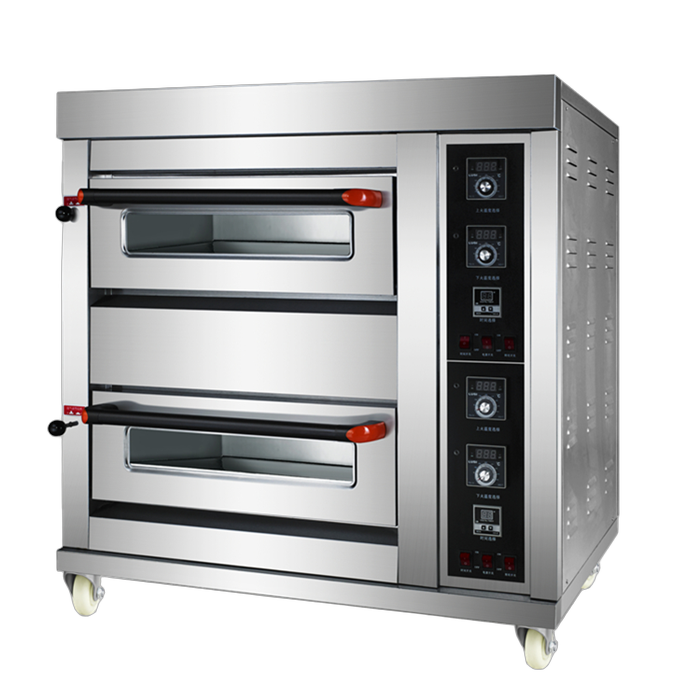
- Deck ovens use radiant conduction heat from a stone base: they produce a crisp bottom crust and are the correct specification for artisan bread, sourdough, pizza and laminated pastry.
- Convection ovens use fan-forced circulating hot air: they bake evenly across multiple trays and are the correct specification for high-volume, even-bake production including pies, pastries, roasts and sheet baking.
- If your menu depends on crusty bread, Neapolitan pizza or stone-baked pastry → deck oven. If your menu depends on consistent multi-tray output across pies, muffins, roasts and reheating → convection oven.
- Purchase price gap (2026 AUD): deck ovens $3,000-$60,000+, convection ovens $280-$23,000. Deck ovens cost more at every tier because of stone construction and higher insulation requirements.
- Running cost gap: convection ovens are 15-25% cheaper to run per hour due to faster heat recovery and shorter preheat times.
- Many commercial kitchens run both: a deck oven for bread and pizza, a convection oven for everything else.
- Both oven types are available from verified Australian suppliers on HospitalityHub.
Deck oven vs convection oven: Which commercial oven fits your kitchen? (2026 comparison)
Deck ovens and convection ovens are the two most common oven types in Australian commercial kitchens - but they produce fundamentally different results. A deck oven transfers heat through a stone base directly into the product, creating the bottom crust and oven spring that artisan bread and pizza demand. A convection oven circulates hot air around every tray evenly, producing consistent results across large batch runs of pies, pastries, roasted meats and sheet-baked goods. Buying the wrong one for your menu creates a quality or throughput problem that costs more to fix than getting the decision right at purchase.
This comparison guide puts both oven types side by side on capability, cost, compliance and the decision factors that determine which one earns its place. To compare purchase pricing, get quotes for deck ovens and convection ovens on HospitalityHub.
Operations where this comparison matters most:
- Bakery-cafes producing both artisan bread and high-volume pastry lines
- Restaurants adding in-house bread or pizza to an existing convection-based kitchen
- New commercial kitchen fit-outs where the oven specification sets the menu capability
- Franchise and multi-site operators standardising oven type across locations
Compare the core differences
Before comparing costs, confirm which heat transfer method your primary menu items require. The table below covers the capabilities that drive the decision.
Factor | Deck Oven | Convection Oven |
|---|---|---|
Heat transfer method |
Radiant conduction from stone base + radiant heat from ceiling elements |
Fan-forced circulating hot air from rear or side-mounted elements |
Primary strength |
Bottom crust development, oven spring, stone-baked texture |
Even multi-tray baking, consistent results across large batches |
Best products |
Artisan bread, sourdough, pizza, croissants, laminated pastry |
Pies, muffins, cookies, roasts, reheating, sheet-baked goods |
Temperature range |
200°C-450°C (pizza models reach 450°C+) |
50°C-300°C (most cap at 300°C) |
Steam injection |
Available on mid-range and above - critical for bread crust |
Not standard - available only on combi-convection hybrid models |
Tray capacity |
1-4 decks, each loaded directly onto stone - no trays for bread/pizza |
4-20+ trays on shelves, all baking simultaneously |
Preheat time |
30-60 minutes (stone must reach thermal mass) |
10-20 minutes (air heats quickly) |
Footprint |
Larger per unit of output - stone construction adds depth and weight |
Compact - stackable models available, countertop options for small kitchens |
If more than 50% of your oven output requires a crisp stone-baked base (bread, pizza, flatbreads) → specify a deck oven. If more than 50% of your output is tray-based batch baking or roasting → specify a convection oven. Kitchens with a genuine 50/50 split often run both.
Evaluate the key specifications
With your oven type confirmed, these are the specifications that determine whether a given model fits your kitchen.
Specification | Deck Oven | Convection Oven |
|---|---|---|
Energy consumption |
6-18 kW per deck (electric) or 20-60 MJ/h (gas) |
2-15 kW (electric) or 15-40 MJ/h (gas) |
Hourly running cost |
$2.50-$7.00/hour (two-deck electric at $0.35/kWh) |
$1.50-$5.00/hour (full-size electric at $0.35/kWh) |
Weight |
150-800 kg (stone adds significant mass) |
40-250 kg |
Ventilation requirement |
Commercial exhaust hood required - gas models need AS/NZS 5601 compliant flue |
Standard commercial exhaust hood - ventless models available for countertop units |
Maintenance |
Stone care, element replacement, steam system descaling, door seals |
Fan motor, element replacement, door seals, filter cleaning |
Understand the full cost comparison (2026 prices)
Purchase price is only part of the picture. Here is how the two oven types compare across the full cost of ownership.
Cost Category | Deck Oven (AUD) | Convection Oven (AUD) |
|---|---|---|
Entry-level new |
$3,000-$8,000 |
$280-$3,000 |
Mid-range new |
$8,000-$25,000 |
$3,000-$12,000 |
High-spec new |
$25,000-$60,000+ |
$12,000-$23,000 |
Used |
$2,000-$15,000 |
$500-$8,000 |
Annual energy (8-12 hr/day) |
$2,500-$8,000 |
$1,500-$5,000 |
Annual maintenance |
$800-$2,500 |
$500-$1,500 |
Installation cost |
$1,000-$3,500 (gas), $500-$1,500 (electric three-phase) |
$200-$800 (most plug-in), $500-$1,500 (three-phase) |
The most common mistake is buying a deck oven for a menu that is 80% tray-baked goods. A $15,000 two-deck oven producing pies and muffins will underperform a $6,000 convection oven on throughput, energy cost and consistency - because the heat transfer method does not match the product. The deck oven premium only pays back when the menu genuinely requires stone-base baking. Get quotes for commercial deck ovens to compare delivered pricing for your specific configuration.
Decision framework - deck oven vs convection oven
Decision Factor | Deck Oven Scores Higher When... | Convection Oven Scores Higher When... |
|---|---|---|
Menu profile |
50%+ of output is bread, pizza or stone-baked pastry |
50%+ of output is tray-baked, roasted or reheated |
Crust requirement |
Crisp bottom crust is a product-defining feature |
Even browning across all surfaces matters more than base crust |
Steam requirement |
Steam injection needed for crust development and oven spring |
Dry heat is the default - steam not required |
Throughput model |
Fewer products per bake, longer cycles, quality over volume |
Many trays per load, short cycles, volume with consistency |
Space constraint |
Kitchen can accommodate 150-800 kg and deeper footprint |
Kitchen needs compact or countertop options under 250 kg |
Budget |
Menu requires stone baking - the premium is justified by product quality |
Budget is a constraint and menu does not require stone-base heat |
Energy sensitivity |
Willing to accept higher per-hour energy cost for stone-baked results |
Energy cost per unit of output is a primary decision factor |
Versatility |
Baking is the primary or sole function of this oven |
Oven must handle baking, roasting, reheating and holding across the full menu |
Evaluate suppliers
You are ready to go to market. Use this checklist to assess each supplier against the same criteria.
Factor | What to Ask |
|---|---|
Menu assessment |
Will the supplier review your menu and production volumes before recommending a model? |
Demo or trial |
Can you bake your actual products in the oven before committing? |
Delivered price |
Total delivered price including stone, steam system, installation and commissioning? |
Warranty |
Warranty period for elements, fans, thermostats, stone and steam system? |
Parts and service |
Are replacement parts Australian-stocked? What is breakdown response time in your state? |
Energy specification |
What is the rated kWh or MJ/h? Can the supplier estimate annual energy cost at your operating hours? |
Installation requirements |
Does the unit need three-phase power, a gas line or reinforced flooring? What is the installation cost? |
Ventilation |
Does your existing exhaust hood meet the oven's ventilation requirement? |
Finance |
Does the supplier offer finance, chattel mortgage or rent-to-own options? |
Trade-in |
Will the supplier accept your existing oven as a trade-in against the new purchase? |
Frequently asked questions
When should i choose a deck oven over a convection oven?
Choose a deck oven when your primary output requires stone-base heat transfer: artisan bread, sourdough, pizza and laminated pastry. If more than 50% of your baked output depends on a crisp bottom crust and oven spring, a convection oven cannot replicate the result.
Can a convection oven bake bread?
A convection oven can bake soft bread rolls, sandwich loaves and enriched doughs adequately. It cannot produce the crisp stone-baked crust, controlled oven spring or hearth texture that artisan bread and sourdough require - those results depend on radiant conduction from a baking stone.
What is the cost difference between deck and convection ovens?
Deck ovens cost 2-3x more than convection ovens at every tier - a mid-range two-deck runs $8,000-$18,000 vs $3,000-$12,000 for a comparable-capacity convection oven. Running costs are also 15-25% higher on deck ovens due to longer preheat and higher energy draw per hour.
Can one kitchen run both oven types?
Yes - many Australian bakery-cafes and restaurants run a deck oven for bread and pizza alongside a convection oven for pastry, pies and roasts. This split gives each product the correct heat profile without compromising on either.
Which oven type has lower maintenance costs?
Convection ovens cost $500-$1,500 per year in maintenance vs $800-$2,500 for deck ovens. Deck oven maintenance is higher due to stone replacement cycles, steam system descaling and the additional weight on door hinges and seals over time.
What matters most
- The decision is driven by your primary baking output - stone-base products need a deck oven, tray-based products need a convection oven
- Deck ovens cost 2-3x more at purchase and 15-25% more to run per hour
- The deck oven premium only pays back when the menu genuinely requires stone-baked results
- Convection ovens offer higher throughput per dollar for tray-based batch baking
- Many kitchens run both oven types to cover the full menu without compromise
- Both oven types require commercial kitchen ventilation and either gas compliance (AS/NZS 5601) or three-phase electrical
Most buyers shortlist 2-3 models after getting a quote - if you are within 90 days of a kitchen fit-out or upgrade, start the comparison now.
Don't waste time contacting suppliers individually. HospitalityHub gives you direct access to verified Australian commercial oven suppliers - where hospitality buyers request and compare multiple quotes so they can buy with confidence.
- Get quotes for commercial deck ovens - contact multiple verified suppliers with a single enquiry
- Compare models - filter by oven type, heat source and region
- Contact suppliers directly - speak to specialists who service your state
→ Get and compare commercial deck oven quotes now → hospitalityhub.com.au/buy/commercial-deck-oven