
Key takeaways
- Food waste costs money. Every scrap thrown away hits your ingredient, labour, and disposal costs.
- Follow the hierarchy. Prioritise Avoid → Reduce → Reuse → Recycle → Dispose to cut waste effectively.
- Use everything. Employ root-to-stem and nose-to-tail techniques to turn trim into profitable menu items.
- Invest in the right tools. Vacuum sealers, dehydrators, and on-site composters reduce spoilage and disposal costs.
- Market your sustainability. Showcasing zero-waste practices attracts eco-conscious Australian diners and builds loyalty.
Introduction: The new kitchen p&l
For Australian hospitality businesses in late 2025, the pressure on profit margins has never been more intense. You're battling rising ingredient prices, high labour costs, and soaring energy bills. Yet, many venues are ignoring one of the most significant and controllable costs in their entire operation: the food they throw in the bin. The scale of this problem is staggering. According to OzHarvest, food waste costs the Australian economy a massive $36.6 billion annually.
In this challenging environment, a "zero-waste kitchen" is no longer just an environmental slogan; it's a critical financial strategy. It’s a movement that reframes waste as a high-cost liability and transforms your kitchen into a highly efficient, profitable, and marketable operation. This article is a practical guide for Australian hospitality owners and managers on the business case for a zero-waste kitchen and the practical steps you can take to join the movement.
The true cost of your general waste bin
Before you can fix the problem, you must understand its full cost. Food waste hits your bottom line three separate times:
- Cost of Purchase: You paid good money for the ingredient in the first place.
- Cost of Labour: Your staff spent paid time receiving, storing, and preparing that ingredient.
- Cost of Disposal: You pay again to have the "waste" (which is really just a misused asset) hauled away.
This third cost is climbing sharply. With landfill space shrinking, state governments across Australia are using levies to discourage waste. In NSW, the levy for metropolitan waste is over $160 per tonne. For a Victorian business, the landfill levy is also in the triple digits. That heavy, wet food waste at the bottom of your bin is costing you a fortune in disposal fees alone.
Your strategic roadmap: The food waste hierarchy
A zero-waste strategy is a systematic process, not a magic wand. The most successful approach follows the food waste hierarchy, which prioritises actions from most to least effective. Your goal is to keep as much as possible at the top of this pyramid.
- Avoid: Prevent waste from being generated in the first place.
- Reduce: Minimise the amount of food waste you create.
- Reuse: Repurpose or "upcycle" food for other uses.
- Recycle: Turn food scraps into compost or energy.
- Dispose: As a last resort, send to landfill.
A successful kitchen focuses its energy on the first three steps: Avoid, Reduce, and Reuse.
Step 1: Avoid and reduce with smart procurement
You cannot have a zero-waste kitchen if you have a zero-thought-through purchasing process. This is the most effective place to stop waste before it even enters your building.
- Accurate forecasting: Use your Point of Sale (POS) system's data. Analyse your sales reports to understand exactly what you sell and when. This allows you to order with precision instead of relying on "gut feel."
- Buy "root-to-stem": Talk to your suppliers. Can you buy the whole vegetable—beets with their tops, carrots with their greens? This forces your kitchen to think creatively about using every part.
- Embrace "ugly" produce: Partner with suppliers who offer "imperfect" or non-standard fruit and vegetables. This produce is often cheaper and just as high-quality, saving you money and reducing waste further up the supply chain.
- Just-in-Time ordering: Implement a "just-in-time" (JIT) ordering system for highly perishable goods. This requires stronger supplier relationships but means less cash is tied up in inventory and there's a lower risk of spoilage.
Step 2: Reuse and repurpose with creative kitchen techniques
This is where your kitchen team's creativity shines. This stage is about changing your mindset to see "trim" not as waste, but as a new ingredient.
A realistic scenario: The broccoli stem
- The old way: A chef cuts the florets off a head of broccoli for a main dish. The thick, nutritious stems—often accounting for 40% of the weight you paid for—are thrown into the compost or bin.
- The zero-waste way: The kitchen views the stem as a new product.
- It's pickled and served with a charcuterie board.
- It's shaved thin and used in a salad.
- It's pureed and becomes the base for a "broccoli and blue cheese soup" special.
Practical "waste-to-value" ideas:
- Vegetable Trim: All your onion skins, carrot peels, and herb stems should be collected and used for stocks and broths.
- Stale Bread: Becomes croutons for a Caesar salad, breadcrumbs for a schnitzel, or the star of a panzanella salad special.
- Citrus Rinds: After juicing, use the rinds to create oleo-saccharum (a sugary citrus oil) for cocktails, or dehydrate them to make a house-made citrus salt
- Meat & Fish Off-cuts: Use trim from premium cuts for staff meals, or create high-margin items like pâté, terrines, or fish cakes.
Step 3: Invest in waste-reducing and waste-managing equipment
Your equipment purchasing decisions play a massive role in achieving your zero-waste goals. This is where you can invest in technology that reduces spoilage and manages the waste you can't avoid.
- High-Quality Vacuum Sealers: A commercial-grade vacuum sealer is your best friend for preservation. By removing air, it dramatically extends the shelf life of proteins, blanched vegetables, and sauces, reducing spoilage and allowing for better portion control.
- Dehydrators and High-Performance Blenders: These are key "repurposing" tools. A dehydrator can turn fruit pulp (left over from juicing) into fruit leathers or garnishes. A high-performance blender can pulverise vegetable trim into smooth purees or emulsions.
- On-Site Composting/Dehydrating: This is the final step for unavoidable food scraps.
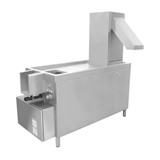
- Commercial Dehydrators: These systems heat and grind food scraps, reducing their volume by up to 90% overnight. This turns heavy, wet waste into a dry, sterile, and odour-free biomass that's easy to store and dispose of.
- In-Vessel Composters: These enclosed systems can turn all your organic waste (including meat and dairy) into nutrient-rich compost in a matter of weeks, which you can then use in your own kitchen garden or donate to community gardens.
- Balers and Compactors: For your non-food waste, a cardboard baler or general waste compactor dramatically reduces the volume of your dry waste, leading to a significant reduction in waste collection fees.
Step 4: Marketing your zero-waste ethos (and why it works)
Now that you're doing the hard work, it's time to tell your customers. This isn't about bragging; it's about sharing a value that resonates deeply with modern Australian consumers.
- Tell the story on your menu: Use descriptive language. A simple menu item like "Pan-Seared Barramundi" becomes a story when it's "Pan-Seared Barramundi with a puree of broccoli stems and house-pickled vegetable trim."
- Show, don't just tell: Use your social media to show your team's zero-waste efforts in action. A post showing your bar manager infusing citrus rinds for a new cocktail or your chef using "ugly" carrots from a local farmer is authentic and engaging.
- Build a community: A genuine commitment to sustainability builds a loyal following. Customers feel good about spending money at a venue that shares their values, which is a powerful driver of repeat business.
Conclusion
The zero-waste kitchen movement is a powerful response to the financial and environmental challenges facing the Australian hospitality industry. It requires a fundamental shift in mindset, from seeing waste as an unavoidable by-product to seeing it as a controllable operational cost and a misused asset. By starting with smart purchasing, fostering creativity in your kitchen, investing in the right equipment, and sharing your journey with your customers, you can build a more resilient, more profitable, and more sustainable business.