
Key takeaways
- What they cost: Refrigerated display cabinets on HospitalityHub range from around $1,000 to $10,000, averaging near $5,500, depending on type and size.
- What sets the price: Cabinet type, size, glass and lighting, refrigeration system, and energy efficiency are the main cost drivers.
- Where they fit: Cafes, bakeries, delis, patisseries, convenience stores, and supermarkets, anywhere chilled product needs to be shown off and sold.
- The compliance line: Chilled potentially hazardous food must generally sit at 5 degrees or colder on display under FSANZ Standard 3.2.2.
- The decision: Match the cabinet type and size to your product and space, then weigh presentation and energy efficiency against the price.
A refrigerated display cabinet does two jobs at once: it keeps chilled product at a safe temperature and it merchandises that product to drive impulse sales. Cakes, sandwiches, drinks, deli items, and desserts all sell better when shown well and held cold, and the right cabinet does both. The category spans compact countertop cases to large serve-over and tower units, and price follows type and size. This guide covers what refrigerated display cabinets cost in Australia in 2026, the specs that shape the price, and how to match one to your venue.
The cabinet types, and how they drive cost
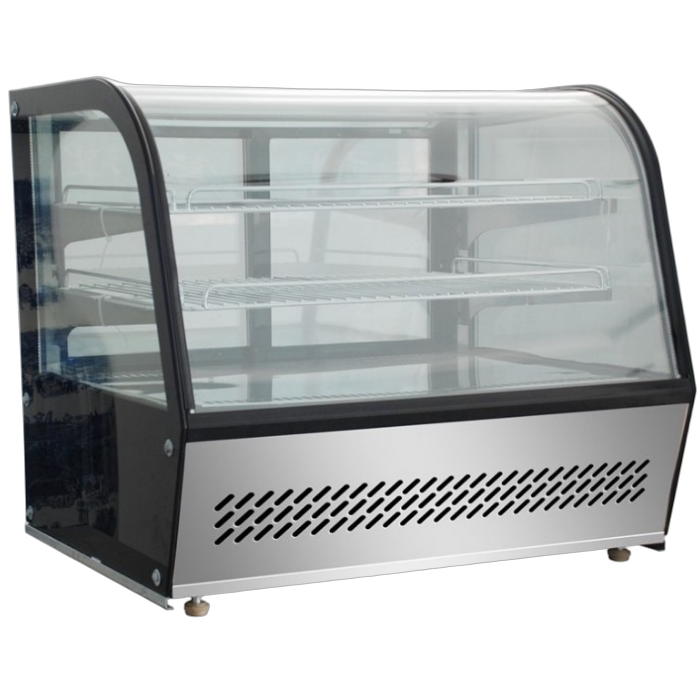
The type of cabinet is the first driver of both suitability and price. Countertop display cases are compact units for point-of-sale impulse buys, ideal where bench space is tight. Glass-door merchandisers hold drinks and packaged product upright behind doors for self-serve. Open-front merchandisers pull customers in with easy access but work the refrigeration harder. Serve-over cabinets suit delis and patisseries where staff serve from behind glass, and tower or multi-deck cabinets maximise display in a small footprint.
Beyond type, size and refrigeration set the cost. A larger cabinet with more deck space, better glass, and LED lighting costs more, and the refrigeration system needs to hold temperature reliably even when doors open frequently or the front is open. Build quality and energy efficiency separate a cheap unit from one that runs cold and cheap for years.
What a refrigerated display cabinet costs in 2026
Price tracks type, size, and efficiency. As a working guide for the Australian market:
- Countertop and compact cases: Roughly $1,000 to $3,000. Small units for cakes, sandwiches, and impulse buys at the counter.
- Mid-size glass-door and serve-over: Around $3,000 to $6,500. Upright merchandisers and deli serve-over cabinets for steady retail display.
- Large open-front and tower/multi-deck: $6,500 to $10,000+. High-capacity merchandisers and towers for supermarkets, large cafes, and high-traffic sites.
The national average sits near $5,500. Features shift the total: larger footprint, heated or curved front glass, LED lighting, castors, and high-efficiency refrigeration all add to the price tag. To compare types and sizes, compare refrigerated display cabinet quotes from Australian suppliers against your product and space, and for cake-specific presentation see the cake display fridge category.
| Cabinet class | Type | Indicative price | Best fit |
|---|---|---|---|
| Countertop / compact | Countertop case | $1,000 - $3,000 | Cafes, counter impulse buys |
| Mid-size | Glass-door / serve-over | $3,000 - $6,500 | Delis, patisseries, retail |
| Large capacity | Open-front / tower | $6,500 - $10,000+ | Supermarkets, high-traffic sites |
The specs that shape the price
When you request quotes, these are the factors that change the total:
- Cabinet type: Countertop, glass-door, open-front, serve-over, or tower. Each suits different product and service, and sets the base price.
- Size and deck space: More display area and shelving costs more and needs more refrigeration capacity to hold temperature.
- Glass and lighting: Curved or heated glass and LED lighting improve presentation and reduce fogging, lifting sales but adding cost.
- Refrigeration and efficiency: A quality system holds temperature through frequent door openings or an open front, and an efficient one keeps running costs down over the cabinet's life.
- Mobility and build: Castors, robust construction, and easy-clean surfaces matter for daily use and repositioning.
Food safety, energy, and total cost of ownership
Two things matter beyond the purchase price: compliance and running cost. Chilled product on display is often potentially hazardous food, which under FSANZ Standard 3.2.2 must generally be held at 5 degrees or colder unless a safe alternative is demonstrated, as Food Standards Australia New Zealand sets out. Choose a cabinet that holds that temperature reliably in your environment, since an open-front unit in a warm cafe works harder than a glass-door one. On running cost, refrigeration is one of the larger energy lines in a food venue, so an efficient cabinet and good door seals pay back over time. For the wider refrigeration picture, including efficiency and maintenance, the cool room and freezer room prices and buying guide is a useful companion.
A realistic scenario
Picture a Brisbane bakery-cafe refreshing its front counter, wanting cakes and sandwiches to look their best while staying compliant through a hot Queensland summer.
A mid-size serve-over cabinet at around $5,500, with curved glass, LED lighting, and a refrigeration system rated to hold 5 degrees reliably in a warm room, presents the range beautifully and keeps product safe on display all day. Good seals and an efficient compressor keep the energy bill in check through summer. It costs more than a bare countertop case, but for a venue selling on presentation and dealing with high ambient heat, the display quality and compliance headroom are worth it.
Frequently asked questions
Which cabinet type is right for my product?
Match type to product and service: countertop for counter impulse buys, glass-door for self-serve drinks and packaged goods, serve-over for deli and patisserie, and open-front or tower for high-traffic merchandising. The product and how you serve it decide the type.
What temperature must a display cabinet hold?
Chilled potentially hazardous food must generally be held at 5 degrees or colder under FSANZ Standard 3.2.2 unless a safe alternative is shown. Choose a cabinet that maintains this reliably in your actual room conditions.
Are open-front cabinets more expensive to run?
They can be, because an open front works the refrigeration harder than a glass-door unit, especially in warm rooms. They merchandise well and boost impulse sales, so weigh the sales lift against the higher energy use.
What ongoing costs should I budget for?
Budget for energy, which is significant for refrigeration, plus periodic servicing, seal checks, and coil cleaning. An efficient cabinet with good seals keeps these costs down over its life.
What matters most
A refrigerated display cabinet has to sell and stay safe at once. Match the type and size to your product and space, insist on refrigeration that holds 5 degrees reliably for FSANZ 3.2.2 compliance in your actual room, and weigh presentation features and energy efficiency against the price. Get the fit right and the cabinet lifts sales while keeping product safe for years. Get it wrong and you either compromise food safety in a warm room or overspend on a cabinet that does not suit your product.
Ready to compare types, sizes, and pricing on refrigerated display cabinets? Get quotes from display cabinet suppliers across Australia here. You can also compare ambient display cabinets for non-chilled product.