
Key takeaways
What they cost: Open display fridges on HospitalityHub run from about $3,000 to $10,000, averaging around $6,500, depending on size and format.
What sets the price: Size, single versus multideck layout, self-contained versus remote refrigeration, and energy features drive the cost.
Where they fit: Convenience stores, supermarkets, cafes, and delis that want customers to grab chilled product themselves.
The trade-off: An open front lifts impulse sales but works the refrigeration harder, so energy use is the number to watch.
The decision: Match size and format to your product and traffic, then check the energy features before you compare price.
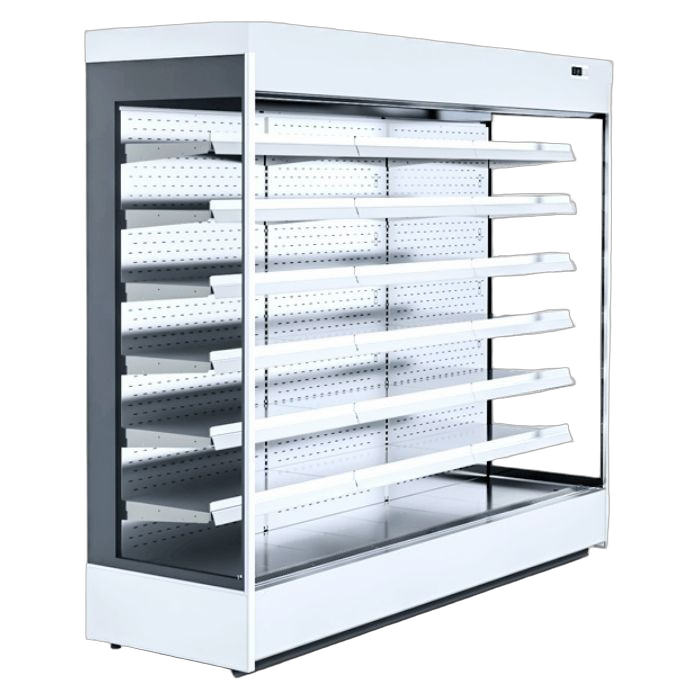
An open display fridge is a chilled merchandiser with no doors. Customers reach straight in for drinks, dairy, deli items, or grab-and-go food. The open front is the whole point: it removes the barrier of a door and drives impulse sales. The trade-off is energy, because an open front loses cold air and works the fridge harder than a glass-door unit. This guide covers what open display fridges cost in Australia in 2026, the specs that matter, and how to match one to your site.
How an open display fridge works, and what drives cost
An open display fridge uses an air curtain, a stream of cold air across the open front, to hold temperature without a door. Some are single-deck tubs or wells for drinks and grab-and-go. Others are multideck units with several shelves that show a lot of product at eye level. The bigger the unit and the more decks it has, the more it costs.
The other big split is the refrigeration setup. A self-contained unit has its own compressor built in and plugs straight into power, which suits most single sites. A remote unit connects to a central refrigeration system, which suits large supermarkets running many cases at once. Self-contained is simpler and cheaper to install; remote scales better for big stores. Build quality and the efficiency of the system separate a cheap unit from one that runs cold and cheap for years.
What an open display fridge costs in 2026
Price tracks size, format, and efficiency. As a rough guide for the Australian market:
Compact single-deck units: About $3,000 to $5,000. Tubs and wells for drinks and grab-and-go in cafes and small stores.
Mid-size multideck merchandisers: Around $5,000 to $8,000. Several shelves of chilled product for convenience stores and delis.
Large and remote-ready units: $8,000 to $10,000+. High-capacity multidecks and remote-system cases for supermarkets.
The average sits near $6,500. LED lighting, night blinds, energy-efficient fans and compressors, and larger footprints all push the price tag up. To compare sizes and formats, compare open display fridge quotes from Australian suppliers, and weigh an open unit against a deli display fridge or a commercial glass-door fridge if energy use is a concern.
Fridge class | Format | Indicative price | Best fit |
|---|---|---|---|
Compact single-deck | Tub / well | $3,000 - $5,000 | Cafes, small stores, grab-and-go |
Mid-size multideck | Self-contained | $5,000 - $8,000 | Convenience stores, delis |
Large / remote-ready | Multideck | $8,000 - $10,000+ | Supermarkets |
The specs that shape the price
When you request quotes, these are the things that change the total:
Size and decks: More width and more shelves show more product and need more refrigeration, which lifts the price.
Self-contained or remote: Self-contained plugs in and suits single sites. Remote ties into a central system and suits large stores, at a higher install cost.
Energy features: Night blinds, efficient fans, and good air-curtain design cut the running cost of an open front. These matter more here than on most fridges.
Lighting and layout: LED lighting and adjustable shelves lift sales and flexibility, and add to the price.
Build quality: A solid cabinet and reliable compressor hold temperature and last longer under all-day open running.
Food safety and running costs
Two things sit alongside the purchase price. First, food safety. Chilled product that can go off must be held at 5 degrees or colder under FSANZ Standard 3.2.2, unless you can show a safe alternative, as Food Standards Australia New Zealand sets out. An open front makes this harder in a warm room, so pick a unit rated to hold temperature in your conditions. Second, energy. An open display fridge is one of the harder-working fridges in a venue, so night blinds and an efficient system genuinely lower the bill. Fit and use the night blind when the store is closed. For the wider cold-storage picture, the cool room and freezer room buying guide is a useful companion.
A realistic scenario
Picture a convenience store in Perth wanting to lift grab-and-go sales. Drinks and snacks sell slowly behind glass doors that customers do not bother opening.
A mid-size multideck open fridge at around $6,500 changes that. The open front puts drinks and chilled snacks right in the customer's reach, and impulse sales climb. The unit has night blinds and efficient fans, so the store pulls them down at close to keep the power bill in check. It uses more energy than a glass-door case, but the extra impulse sales more than cover it. The higher spend earns out through the till.
Frequently asked questions
Open front or glass door?
Open front lifts impulse sales because there is no door to open, but it uses more energy. Glass door is cheaper to run but sells a little less on impulse. Pick open front where grab-and-go sales matter most.
Self-contained or remote?
Self-contained has its own compressor and plugs in, which suits single sites and is cheaper to install. Remote ties into a central refrigeration system and suits large supermarkets running many cases at once.
Do night blinds really help?
Yes. Pulling a night blind over the open front when the store is closed holds the cold in and cuts overnight energy use noticeably. It is one of the simplest ways to lower the running cost of an open unit.
Can it hold safe temperatures?
A good open display fridge holds 5 degrees or colder as FSANZ 3.2.2 requires, but it works harder in a warm room. Confirm the unit is rated for your conditions and keep it out of direct heat and draughts.
What matters most
An open display fridge is an impulse-sales play with an energy cost attached. Match the size and format to your product and traffic, choose self-contained or remote to suit your site, and check the energy features, since an open front works hard. Get the fit right and the open front lifts sales while holding product safe. Get it wrong and you either run up the power bill or buy capacity your site never uses.
Ready to compare sizes, formats, and pricing on open display fridges? Get quotes from open display fridge suppliers across Australia here.


-160x160-state_article-rel-cat.png)

-160x160-state_article-rel-cat.jpg)