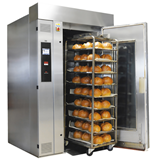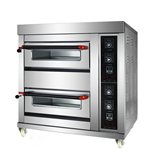

Key takeaways
- New commercial convection oven prices (2026 AUD): countertop $280-$7,000, full-size single $5,000-$15,000, full-size double-stack $10,000-$23,000.
- Gas vs electric: gas convection ovens cost 20-30% less per operating hour but require AS/NZS 5601 compliant gas installation. Electric units plug into standard or three-phase power with lower installation cost.
- If your kitchen runs fewer than 100 covers per service → a countertop convection oven covers the output. Above 100 covers or running a bakery program alongside the main menu → specify a full-size unit.
- Tray capacity is the specification that sets your throughput: countertop models hold 3-5 trays, full-size single units hold 5-10, double-stack units hold 10-20.
- Convection ovens cook 20-25% faster than static ovens due to fan-forced air circulation, reducing service bottlenecks at peak times.
- Programmable controls add $2,000-$5,000 to purchase price but reduce operator error, improve consistency across shifts and lower training time for new staff.
- Commercial convection ovens are available from verified Australian suppliers on HospitalityHub.
Introduction
A commercial convection oven is the most versatile cooking asset in most Australian commercial kitchens. Fan-forced air circulation delivers even heat across every tray, making convection ovens the standard specification for restaurants, cafes, bakeries, catering kitchens and aged care facilities producing pies, pastries, roasts, baked vegetables and sheet-baked goods at volume. In 2026, prices range from $280 for a compact countertop unit to $23,000 for a programmable double-stack model with humidity control - and the configuration gap between those tiers determines whether the oven keeps up with service or bottlenecks production at the worst possible time.
This guide walks you through the three decisions that set your price: size and format, gas vs electric, and the feature set that separates a workhorse from a liability. If you are comparing supplier quotes, get quotes for commercial convection ovens on HospitalityHub to benchmark pricing from multiple suppliers. For a deeper comparison between convection and deck ovens, see the commercial convection oven buying guide on HospitalityHub.
Operations that typically invest in convection ovens:
- Restaurants and bistros running oven-heavy menus (roasts, gratins, baked dishes)
- Cafes producing pastries, muffins, pies and quiches in-house
- Catering and function kitchens requiring high-volume batch cooking
- Aged care, hospital and institutional kitchens with fixed menu cycles
- Food trucks and convenience outlets needing compact countertop baking
Choose your size and heat source
Before specifying anything else, confirm the oven size and heat source your kitchen requires. Your choice here sets your price bracket, installation requirements and the operating cost floor for the life of the asset.
Configuration | Price Range (AUD) | Best For |
|---|---|---|
Countertop electric (3-5 trays) |
$280-$7,000 |
Food trucks, small cafes, convenience stores, low-volume baking under 100 covers |
Full-size single (5-10 trays, gas or electric) |
$5,000-$15,000 |
Restaurants, cafes, hotel kitchens running 100-300 covers per service |
Full-size double-stack (10-20 trays, gas or electric) |
$10,000-$23,000 |
Catering kitchens, institutional food service, high-volume bakeries, 300+ covers |
If your kitchen consistently serves under 100 covers and oven-based items are a secondary part of the menu, a countertop unit keeps capital under $7,000. Above 100 covers or where the oven runs continuously through service, a full-size unit is the minimum specification - the throughput gap between countertop and full-size pays back the price difference within the first month of operation.
When to choose gas
Gas convection ovens run 20-30% cheaper per operating hour than electric at current Australian commercial tariffs. They are the correct specification when the kitchen has an existing gas supply, runs the oven 8+ hours per day and energy cost is a primary budget concern. Gas units require installation by a licensed gasfitter and annual gas safety certification under AS/NZS 5601.
When to choose electric
Electric convection ovens offer lower installation cost (plug-in for single-phase countertop models, hardwired for three-phase full-size), more precise digital temperature control and simpler ventilation requirements. They are the correct specification for kitchens without gas supply, compact spaces, food trucks and operations where installation speed and portability matter more than per-hour energy cost.
Evaluate the key specifications
With your size and heat source confirmed, these are the specifications that determine whether a given model fits your kitchen and menu.
Specification | Typical Range | Buyer Consideration |
|---|---|---|
Tray capacity |
3-5 (countertop), 5-10 (single), 10-20 (double-stack) |
Calculate how many trays you need per service window - underspecifying creates a bottleneck at peak |
Tray size |
Half-size (460 x 330 mm), full-size GN 1/1 (530 x 325 mm), bakery 600 x 400 mm |
Match to your existing tray inventory - buying an oven that takes a different tray size means replacing all trays |
Temperature range |
50°C-300°C |
Most commercial baking and roasting occurs at 150-250°C - 300°C is only needed for high-heat finishing |
Fan type |
Single-speed, multi-speed or reversing |
Reversing fans improve evenness across all trays - adds $1,000-$3,000 but reduces rotation and waste |
Controls |
Manual dial, digital, programmable with recipe memory |
Programmable controls add $2,000-$5,000 but reduce operator error across shifts and speed up staff training |
Humidity control |
None, manual steam injection, or automatic humidity sensing |
Adds $1,500-$4,000 - required for bread rolls and certain pastries, optional for most restaurant menus |
Understand the full cost breakdown (2026 prices)
Purchase price is only part of the picture. Here is the full cost of owning a commercial convection oven in Australia.
Category | Cost Range (AUD) | Typical Configuration |
|---|---|---|
New countertop electric |
$280-$7,000 |
3-5 trays, single-phase plug-in, manual controls |
New full-size single |
$5,000-$15,000 |
5-10 trays, gas or three-phase electric, digital controls |
New full-size double-stack |
$10,000-$23,000 |
10-20 trays, gas or three-phase, programmable, reversing fan |
Used |
$500-$10,000 |
All configurations - price depends on age, brand and condition |
Annual energy (electric, full-size) |
$2,000-$5,500 |
8-12 hours/day at $0.30-$0.40/kWh commercial rate |
Annual energy (gas, full-size) |
$1,500-$4,000 |
8-12 hours/day at current commercial gas rates |
Annual maintenance |
$500-$1,500 |
Fan motor, element or burner check, door seal, thermostat calibration |
The most common mistake is buying a countertop convection oven for a kitchen that runs above 100 covers per service. A $2,000 countertop with 4 trays running at capacity during a 150-cover service creates a 20-30 minute bottleneck that slows plating and pushes ticket times out - the $3,000-$8,000 step up to a full-size unit pays for itself within the first quarter through faster service and lower food waste from timing errors. For a full-size electric unit at $10,000 running 10 hours per day, annual running costs total $2,500-$7,000. Get quotes for commercial convection ovens to compare delivered pricing before finalising your specification.
Plan the asset - depreciation and financing
The ATO assigns an effective life of 10 years for commercial ovens. Under diminishing value, the depreciation rate is 20%. Under prime cost, it is 10%. The current instant asset write-off threshold of $20,000 (2026 financial year) covers all countertop and most full-size single convection ovens outright for eligible small businesses. For double-stack units above $20,000, chattel mortgage or equipment lease structures apply.
For new hospitality venues where trading volume is unproven, a short-term rent-to-own or operating lease limits capital exposure while you validate covers per service. Residual values for well-maintained commercial convection ovens at 8-10 years sit at 10-15% of purchase price, with premium European brands holding value better than entry-level imports.
Evaluate suppliers
You are ready to go to market. Use this checklist to assess each supplier against the same criteria.
Factor | What to Ask |
|---|---|
Kitchen assessment |
Will the supplier review your menu, covers per service and kitchen layout before recommending a model? |
Delivered price |
Total delivered price including stand (if applicable), installation and commissioning? |
Tray compatibility |
Does the oven take standard GN 1/1 trays or a proprietary tray size? |
Warranty |
Warranty period for heating elements, fan motor, controls and door seal? |
Parts and service |
Are replacement parts Australian-stocked? What is breakdown response time? |
Energy rating |
What is the rated kWh or MJ/h? Can the supplier estimate annual energy cost at your operating hours? |
Demo |
Can you cook your menu items in the oven before purchasing? |
Ventilation |
Does your existing exhaust hood meet the oven's ventilation requirement? Is the unit ventless-rated? |
Finance |
Does the supplier offer rent-to-own, chattel mortgage or equipment lease options? |
Lead time |
Current delivery lead time? Are ex-demo or display units available sooner? |
Frequently asked questions
How much does a commercial convection oven cost in Australia?
Prices range from $280 for a basic countertop to $23,000 for a programmable double-stack unit. The average price for a reliable mid-range full-size oven is $5,000-$10,000 in 2026 AUD.
Should i choose gas or electric for my commercial convection oven?
Gas runs 20-30% cheaper per operating hour but requires a licensed gas installation and annual certification. Electric offers lower installation cost, more precise digital controls and works in kitchens without gas supply. Choose based on existing infrastructure and daily operating hours.
At what cover count should i upgrade from countertop to full-size?
Once your kitchen consistently exceeds 100 covers per service with oven-dependent menu items, a full-size unit eliminates the bottleneck a 3-5 tray countertop creates during peak service. The throughput improvement pays back the $3,000-$8,000 upgrade within the first quarter.
Do i need a reversing fan in my convection oven?
Reversing fans improve heat distribution across all tray positions, reducing the need to rotate trays mid-bake. They add $1,000-$3,000 to the purchase price and are worth specifying for bakery operations and any kitchen running 8+ trays per load where even browning across every tray matters.
What compliance is required for a gas convection oven in Australia?
Gas convection ovens must be installed by a licensed gasfitter and certified compliant under AS/NZS 5601. Annual gas safety certification is required in most states, and the kitchen must meet local council ventilation and exhaust hood requirements.
What matters most
- Tray capacity is the spec that sets your throughput - match it to covers per service, not to budget
- Gas runs 20-30% cheaper per hour than electric at current Australian commercial tariffs
- Countertop ovens cap out at around 100 covers - above that, full-size is the minimum spec
- Reversing fans and programmable controls add $3,000-$8,000 but reduce waste and training time
- Most countertop and full-size single units fall under the $20,000 instant asset write-off threshold
- Gas units require AS/NZS 5601 installation and annual certification
Most buyers shortlist 2-3 models after getting a quote - if you are within 60 days of a kitchen fit-out, start the comparison now.
Don't waste time contacting suppliers individually. HospitalityHub gives you direct access to verified Australian commercial convection oven suppliers - where hospitality buyers request and compare multiple quotes so they can buy with confidence.
- Get quotes for commercial convection ovens - contact multiple verified suppliers with a single enquiry
- Compare models - filter by tray count, heat source and region
- Contact suppliers directly - speak to specialists who service your state
→ Get and compare commercial convection oven quotes now → hospitalityhub.com.au/buy/commercial-convection-oven