

Key takeaways
- What you will pay: The canopy alone typically lists from $2,000 to $10,000, but a complete installed system, including ductwork, fan, and make-up air, more commonly runs $10,000 to $30,000 or more.
- Where the money goes: Ductwork alone can account for 25 to 40% of an installation, so the price tag on the hood is only part of the picture.
- Wall versus island: Wall-mounted canopies are the most affordable, while island canopies cost more because they extract on all sides.
- Why it matters: Commercial kitchen ventilation must meet AS 1668.1 and AS 1668.2, so an undersized or non-compliant hood is a safety and approval risk, not just a comfort issue.
- The decision: Size the system to your cooking line and airflow duty first, then budget for the full install and ongoing cleaning, not just the canopy.
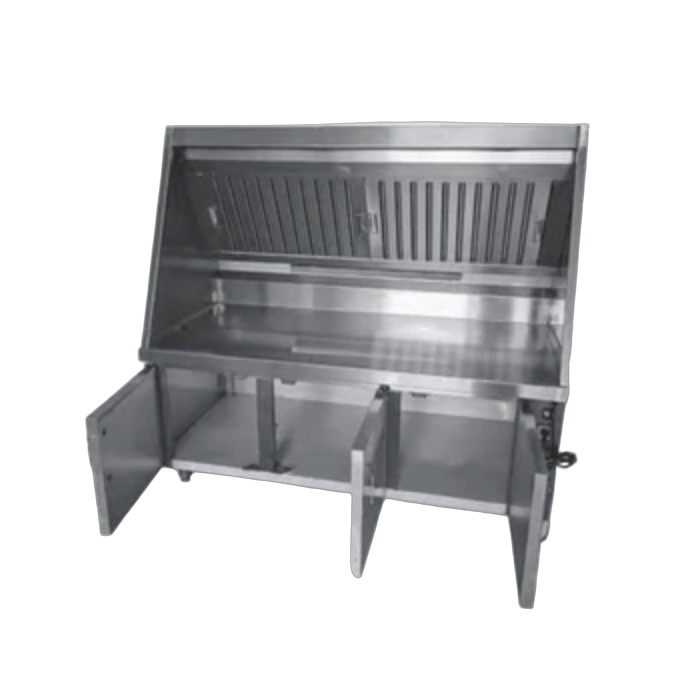
A commercial exhaust hood looks like a simple stainless box, but it is the heart of a system that pulls heat, smoke, grease, and steam off your cooking line and keeps your kitchen compliant. Buy the canopy in isolation and you will be surprised by the ductwork, fan, and make-up air quotes that follow. This guide sets out what commercial exhaust hoods cost in Australia in 2026, why the installed price is the number that matters, and the specs that keep you on the right side of the standards.
Why ventilation is a compliance issue, not a comfort one
Australian commercial kitchen exhaust is governed by Australian Standards called up through the National Construction Code. AS 1668.2 covers the mechanical ventilation and make-up air design that decides how much air your hood must move, while AS 1668.1 covers the fire and smoke control side. Get the design wrong and you face failed inspections, poor extraction, and a real fire risk from grease building up in an undersized or badly ducted system.
The stakes are rising with the sector. The restaurants industry alone is worth around $26.2 billion across roughly 29,765 businesses, and cafes and coffee shops add another 27,623 businesses, according to IBISWorld. With about 966,000 people employed in accommodation and food services as at August 2025, per Jobs and Skills Australia, a compliant, well-ventilated kitchen is also a workforce and staff-safety investment. A hood that keeps the line cool and smoke-free protects both your fit-out approval and the people working under it.
What a commercial exhaust hood costs in Australia
There are two numbers to hold in mind: the canopy unit price, and the installed system price. Treat the bands below as a price guide for comparison rather than fixed quotes, since length, type, and site all change the figure.
| Item | Typical price | Notes |
|---|---|---|
| Compact / small wall canopy | $1,200 - $2,600 | Small cafes, light cooking, integrated fan |
| Mid-size wall canopy (fan integrated) | $3,500 - $5,000 | Most restaurant cooking lines |
| Wall canopy (per linear metre) | $2,500 - $6,500 / m | Custom runs, bare canopy before duct |
| Island / central canopy (per linear metre) | $4,000 - $9,000 / m | Extracts on all sides, dearer |
| Complete installed system | $10,000 - $30,000+ | Canopy, ductwork, fan, make-up air, install |
The canopy category on the marketplace sits around a $6,000 average, but the installed figure is where most budgets land. As a rough scale, a small cafe or takeaway system runs about $8,000 to $15,000, a mid-size restaurant $15,000 to $28,000, and a large commercial kitchen $28,000 to $45,000 or more. Ductwork is the biggest variable at 25 to 40% of the install, and you will also need a separate exhaust fan and balanced make-up air on larger runs. Plan for ongoing costs too: professional grease and hood cleaning runs roughly $1,500 to $3,000 a year. Look at total cost of ownership across the system rather than the price tag on the canopy alone. You can compare current listings on the commercial exhaust hood and exhaust fan pages.
The specs that decide the price
These are the features to line up when you request quotes:
- Length and overhang: The canopy must overhang the cooking line, usually by around 150 mm each side, so it is sized to your equipment run. Price scales per linear metre.
- Wall versus island: A wall-mounted canopy sits against a wall and is the cheapest option. An island or central canopy extracts on all faces and costs more per metre.
- Baffle versus mesh filters: Stainless baffle filters drain grease, resist flame, and clean in a dishwasher, which is why they are preferred and expected on grease-producing lines. Mesh filters are cheaper but clog and carry more fire risk.
- Integrated versus separate fan: Small hoods can run an in-canopy fan, while larger runs use a separate external or roof-mounted exhaust fan for quieter, more effective extraction of grease-laden air.
- Airflow and make-up air: Extraction is sized in litres per second under AS 1668.2, and you need balanced make-up air so the kitchen is not starved. Undersized make-up air causes doors that slam and poor capture.
- Stainless grade: Grade 304 stainless is the durable, hygienic benchmark to compare, while cheaper units use lighter 430.
- Fire suppression compatibility: Provision for a wet-chemical suppression system and fire-rated ductwork matters for compliance and insurance.
Sizing the system to your kitchen
The most expensive mistakes come from treating the hood as an off-the-shelf box rather than one part of an engineered system. Match the canopy, duct run, fan, and make-up air together, and involve a mechanical engineer early so the design is certified to the standard before install.
A realistic scenario
Picture a new 60-seat restaurant fitting out a tenancy in inner Brisbane with a six-burner range, a chargrill, and a fryer along one wall. The owner is quoted about $4,500 for a 3-metre wall canopy with baffle filters and is tempted to treat that as the ventilation budget.
In reality the canopy is roughly a third of the job. Once the grease-rated ductwork to the roof, an external exhaust fan, tempered make-up air, and mechanical engineering certification to AS 1668.2 are added, the installed system lands closer to $18,000. Because the chargrill throws heat and flame, the baffle filters and fire-rated duct are non-negotiable. The lesson is to price the whole system from day one and confirm the design is certified, rather than budgeting off the canopy quote alone. The restaurant fitout buying guide puts exhaust and ducting in the context of the wider fit-out spend.
Frequently asked questions
How much does a commercial exhaust hood cost in Australia?
The canopy alone generally lists from $2,000 to $10,000 depending on size and type, with an average around $6,000. A complete installed system including ductwork, fan, and make-up air more commonly runs $10,000 to $30,000 or more, and large kitchens can exceed $45,000.
Why is the installed price so much higher than the canopy price?
Because the hood is one part of a system. Grease-rated ductwork alone can be 25 to 40% of the install, and you also pay for a separate exhaust fan, balanced make-up air, roof penetration, and mechanical engineering certification to the standards.
What standards do commercial kitchen exhaust hoods need to meet?
Commercial kitchen ventilation is designed to AS 1668.2 for mechanical ventilation and make-up air, and AS 1668.1 for fire and smoke control, both called up through the National Construction Code. Local council approval and food-safety requirements also apply, so use a designer familiar with the standards.
What is the difference between a wall canopy and an island canopy?
A wall canopy mounts against a wall and extracts from one open face, making it the cheaper option. An island or central canopy sits over a freestanding cooking suite and extracts on all sides, so it needs more airflow and costs more per linear metre.
What matters most
A commercial exhaust hood is a system decision, not a box purchase. Size the canopy to your cooking line, then budget for the ductwork, fan, and make-up air that make it work and keep it compliant with AS 1668. Choose baffle filters and 304 stainless for grease lines, get the design certified before install, and factor in annual cleaning. Get the whole system right and your kitchen stays cool, safe, and approved. Price the canopy alone and the real bill will catch you out.
Ready to compare canopies, airflow, and full-system pricing for your kitchen? Request quotes from exhaust hood suppliers across Australia here.